
Stretching a Home Maintenance Budget Across the Full Year
In this article
How to plan and prioritize seasonal upkeep tasks so routine maintenance does not turn into costly emergency repairs.
Key Takeaways
- Spreading maintenance tasks across four seasons prevents budget spikes and costly emergency repairs.
- A dedicated home maintenance fund of 1% to 2% of home value per year is a widely cited general guideline.
- Catching small problems early, such as a minor roof leak or caulk gap, typically costs far less than fixing the damage they cause.
- Knowing which tasks to DIY and which require a licensed professional protects both your safety and your budget.
- Pairing a maintenance calendar with your household financial review keeps spending predictable and avoids surprises.
Why annual budgeting beats reactive spending
Most home repair bills arrive without warning. A furnace quits in January, gutters pull away from the fascia after a wet fall, or a bathroom caulk gap quietly rots the subfloor for two years before anyone notices. Each of these scenarios shares a common cause: deferred, unplanned maintenance.
Financial planners and home inspectors broadly suggest setting aside 1% to 2% of a home's purchase price each year for upkeep. On a $250,000 home, that is $2,500 to $5,000 annually. Many families have no dedicated fund at all, which means every repair comes out of groceries or goes onto a credit card. Building even a small, separate maintenance account changes that dynamic. It turns unpredictable emergencies into budgeted line items.
The annual financial reset checklist is a good place to slot in a maintenance fund review alongside insurance, savings, and recurring expenses. Treating the home the same way you treat the car, with scheduled upkeep rather than breakdown-driven fixes, is the single biggest shift a budget-conscious family can make.
Building a seasonal maintenance calendar
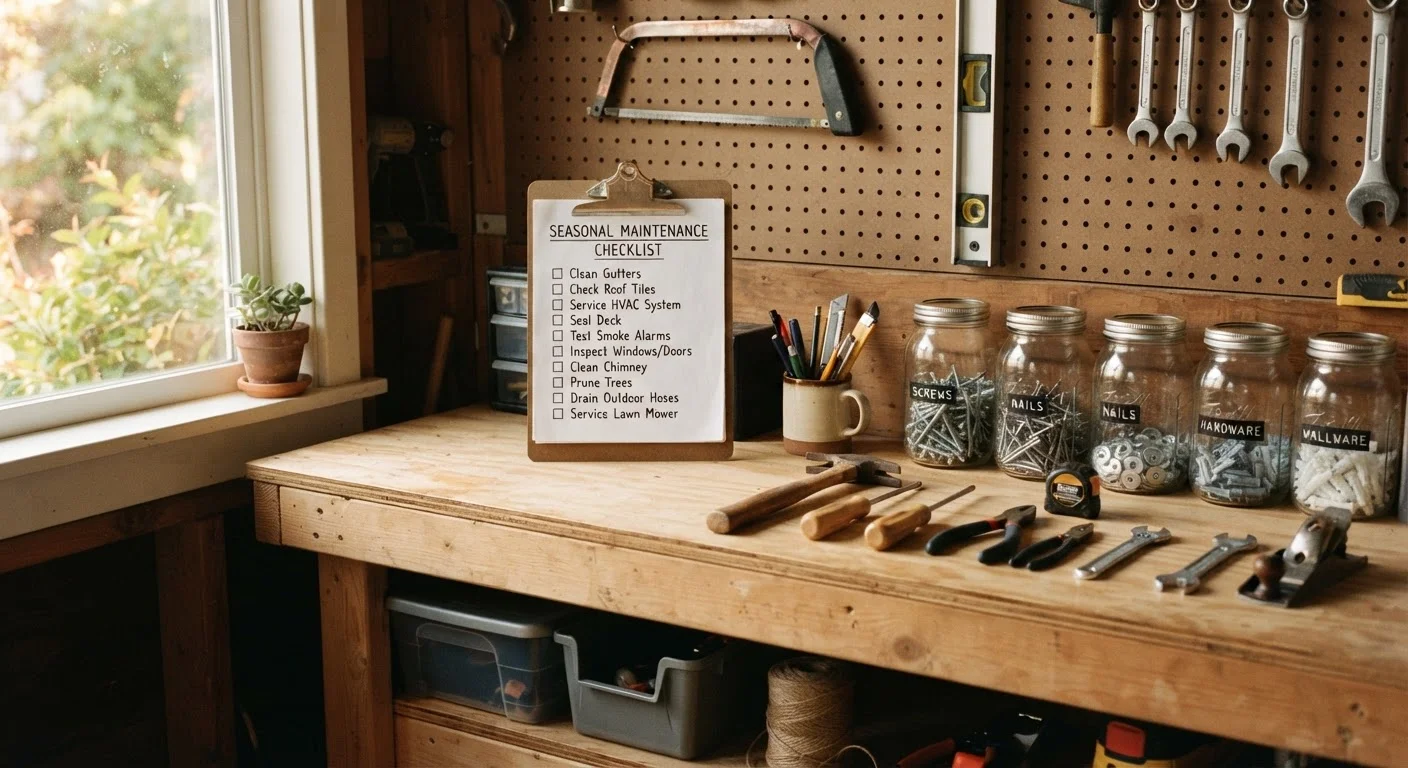
Organizing tasks by season distributes both the labor and the cost so no single month takes the full hit.
Spring
Walk the roof and gutters after winter. Look for lifted shingles, cracked flashing around chimneys and vents, and debris blocking downspouts. Clean and test window and door screens. Check exterior caulk around windows, doors, and utility penetrations; re-caulk anywhere the bead has cracked or separated. A $6 tube of caulk applied now can prevent water intrusion that costs hundreds to remediate later.
Summer
Service the central air conditioning system, or have an HVAC technician do it before peak cooling season. Check attic ventilation; poor airflow in summer raises cooling costs and accelerates shingle wear. Inspect wood decks and fences for rot, loose fasteners, and surface degradation. For outdoor projects that improve curb appeal without big contractor bills, see weekend curb appeal on a tight budget.
Fall
Have the furnace or boiler serviced before the first cold snap; technicians are far more available and sometimes less expensive in September than in December. Clean gutters after leaves finish falling. Drain exterior hose bibs and irrigation lines before freezing temperatures arrive. These are low-skill tasks that almost any homeowner can handle safely.
Winter
Inspect plumbing in unheated spaces such as crawl spaces and garages. Check weather stripping on exterior doors; a visible gap wastes heat and adds to utility bills. Test smoke and carbon monoxide detectors and replace batteries. Review your maintenance log to note what came up this year and budget for next year.
Set up a dedicated home maintenance savings account separate from your general emergency fund.
Mixing maintenance money with emergency savings leads to spending it on non-home expenses. A separate account makes the balance visible and discourages raiding it for other purposes.
Schedule one maintenance walkthrough per season, outside and inside, and write down every issue you find.
A written list converts vague worry into a concrete work queue. It also prevents small problems from being forgotten until they become expensive ones.
Tackle water-related vulnerabilities before any other cosmetic work.
Water infiltration causes mold, rot, and structural damage faster than almost any other problem. Addressing it first protects everything else in the home.
Always verify local permit requirements before starting any project beyond basic maintenance.
Unpermitted work can create problems during a home sale, void insurance claims, and in some cases require costly removal and re-doing. A quick call to the local building department costs nothing.
Book HVAC service appointments in the off-season, spring for AC, fall for heating, rather than at the start of peak demand.
Technician availability is higher and scheduling pressure is lower outside peak season. Some service providers offer off-peak pricing, though this varies by market.
Prioritizing repairs when money is limited
Not every maintenance item carries equal urgency. A useful mental framework puts repairs into three groups: safety-critical, damage-preventing, and cosmetic.
Safety-critical items include anything involving gas, electrical panels, structural load, or carbon monoxide risk. These cannot wait and should be handled by a licensed professional. Attempting panel work, gas line repairs, or structural modifications without the proper credentials is not a cost-saving move; it creates liability and can void homeowner's insurance coverage. For a clear-eyed view of which tasks cross that line, see DIY tasks that are safe to do yourself.
Damage-preventing repairs come next. A small roof leak, a cracked foundation seal, or a slow drain that backs up into a bathroom floor all cause disproportionate damage if ignored. Spending $150 to seal a flashing joint is almost always less expensive than the drywall, insulation, and mold remediation that follows a season of unchecked water intrusion.
Cosmetic issues, peeling paint on an interior wall or a cracked tile in a low-traffic hallway, can wait until the budget allows. They do not get worse at the same rate that water or structural problems do.
Before any repair project, walk through the steps in the pre-work checklist to confirm permit requirements, material costs, and whether the job genuinely fits your skill level.
Keeping costs down without cutting corners
Renting infrequently used tools rather than buying them is one reliable way to reduce project costs. A pressure washer used once a year for deck cleaning or driveway maintenance rarely pays for itself in ownership. The math behind renting tools article walks through how to calculate whether a purchase or a rental actually saves money for specific jobs.
Getting multiple quotes for any work you do hire out is standard practice, but it matters most for larger jobs. For smaller repairs under $500, the time spent soliciting three bids sometimes exceeds the savings. Knowing which myths inflate perceived repair costs also helps; common misconceptions are addressed in home repair myths that cost families money.
Finally, a written maintenance log, even a simple notebook kept in a kitchen drawer, gives you real data on what you spent, what was done, and what is coming due. That record is useful when comparing contractor quotes and when setting the following year's budget. It also documents improvements for resale purposes, which has its own long-term financial value.

Author
Home on a Budget Editorial Team
Home on a Budget Editorial Team is the collective byline for our editorial team and contributor network. Articles published under this byline or an editorial pen name are researched, written, and reviewed according to our editorial standards for clarity, consistency, and independence before publication.
View all articles