
Cooking Once, Eating All Week: How Batch Cooking Works for Real Families
In this article
Batch cooking cuts weeknight stress and food costs at the same time. This introduction explains the basics and how to get started without burning out.
Key Takeaways
- Batch cooking means preparing large quantities of food in a single session for use across multiple days.
- Cooking in bulk typically lowers cost per serving by reducing food waste and avoiding last-minute takeout.
- A first session works best when focused on two or three versatile base ingredients rather than complete meals.
- Proper storage, including labelled containers and a clear fridge system, is what makes batch cooking usable day to day.
- Pairing batch cooking with a weekly meal plan multiplies its impact on both time and grocery spending.
What batch cooking actually means
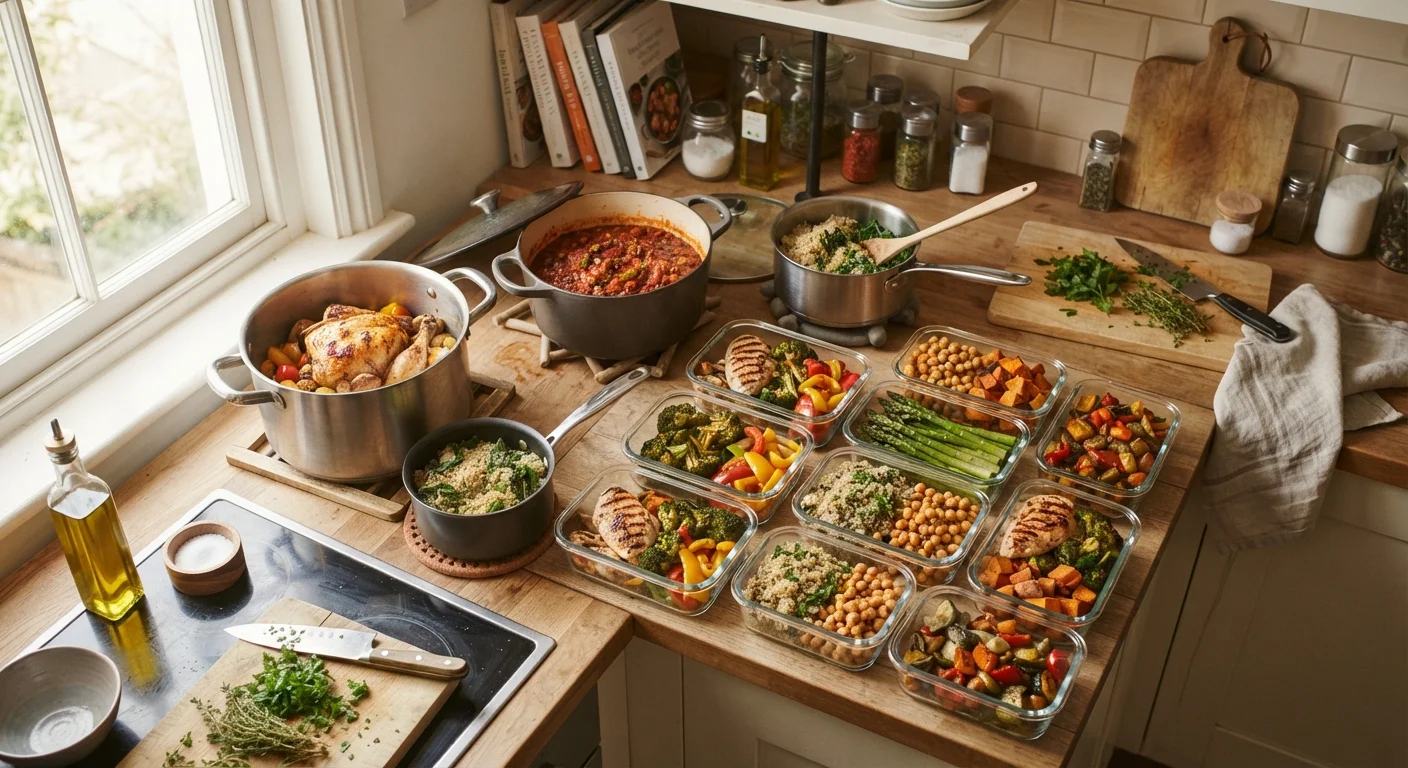
Batch cooking is the practice of preparing a larger quantity of food than you need for one meal, then using the surplus across several days. It is not about cooking every dinner in advance or filling your freezer with identical plastic trays. The goal is to have cooked components ready to assemble into different meals quickly.
A typical session might produce a pot of rice, a tray of roasted vegetables, a batch of cooked beans, and some seasoned ground meat. Those four items can become grain bowls, tacos, soup, or fried rice depending on the day and who is eating.
Batch cooking
Preparing large quantities of food in a single session so the results can be used across multiple meals over several days.
Base ingredients
Cooked components like grains, proteins, or vegetables that can be combined in different ways to make varied meals throughout the week.
Food waste
Food purchased but not eaten before it spoils, which directly reduces the value of a grocery budget.
Cost per serving
The total cost of an ingredient or meal divided by the number of portions it produces. Cooking in bulk typically lowers this number.
This approach pairs naturally with a weekly meal plan: when you know in advance what the week looks like, you cook only what will actually be used.
Why it works for tight budgets and busy schedules
Cooking in volume lowers the effective cost of a meal in a straightforward way: you use more of what you buy, and you buy fewer expensive convenience items mid-week. A bag of dried lentils costs far less per serving than a rotisserie chicken from a gas station on a Tuesday night.
Food waste is one of the biggest hidden drains on a grocery budget. When ingredients are cooked and ready, they get eaten rather than forgotten at the back of the fridge. The USDA estimates that American households discard a substantial share of the food they purchase each year. Batch cooking directly reduces that waste by turning raw ingredients into usable meals before they spoil.
For busy families, the calculation is also about time. A Wednesday night where dinner takes ten minutes to assemble from pre-cooked components is far more sustainable than starting from scratch every evening. That reduction in weeknight pressure is often what makes families stick with the habit. If your household budget could use a broader look, a plain-English breakdown of family spending can help put food costs in context.
How to run your first batch cooking session
Start small. Pick two or three base ingredients rather than attempting six complete dishes. Complexity is what burns people out after one session.
- Choose a two-hour window, typically a weekend afternoon, when the kitchen is available and unhurried.
- Plan around ingredients the family already eats. This is not the moment to introduce new foods.
- Run overlapping tasks. While a pot of beans simmers, roast a sheet pan of vegetables and cook a grain on the stovetop simultaneously.
- Let everything cool fully before sealing into containers. Hot food sealed immediately creates condensation that shortens shelf life.
A well-stocked pantry is what makes this feasible on short notice. When staples like dried grains, canned tomatoes, and cooking oil are already on hand, a batch session requires only a small grocery trip for fresh items.
Sheet pan cooking and large-pot methods are the two techniques that produce the most output per minute in a batch session.
Start with one pot, not a full menu
For a first session, cook just one large batch of a grain and one protein. That alone covers three to four weeknight dinners when combined with whatever vegetables and sauces you have on hand. Adding more variety each week as the habit settles is far more sustainable than attempting ten dishes at once.
Storing and using what you cook
Storage is where batch cooking either pays off or falls apart. Cooked food you cannot find, identify, or reach in time is food that goes to waste.
- Use clear containers so contents are visible without opening them.
- Label each container with the food and the date it was cooked.
- Keep batch-cooked items at eye level in the fridge, not stacked behind condiments.
- Move anything you will not eat within four days to the freezer immediately after it cools.
Cooked beans and lentils freeze particularly well and can go from frozen to table in minutes with a little broth and heat. That flexibility is part of what makes them worth cooking in volume.
Keeping it from feeling like a chore
Batch cooking fails when it becomes another obligation on an already full schedule. A few habits prevent that.
Rotate the ingredients. Cooking the same four things every week for a month creates food fatigue. Swap one item each session to keep meals from blurring together.
Do not aim for perfection. A partial session that produces only one or two components is still worth doing. A pot of cooked rice and a bag of washed salad greens are still meaningful on a Wednesday.
Keep the session social if that helps. Some families make it a group activity, with older kids handling simpler tasks like rinsing beans or portioning cooked food into containers. That spreads the work and builds practical cooking skills at the same time.
The session does not need to be weekly. Some families batch cook every other weekend and supplement with quick weeknight cooking. The right frequency is whatever produces enough food to reduce stress without adding new stress.
Frequently Asked Questions

Author
Affordable Eating Editorial Team
Affordable Eating Editorial Team is the collective byline for our editorial team and contributor network. Articles published under this byline or an editorial pen name are researched, written, and reviewed according to our editorial standards for clarity, consistency, and independence before publication.
View all articles