
Buying a Used Car Without Getting Burned
In this article
A comprehensive walkthrough of the used car process, from setting a budget and reading a vehicle history report to inspection and paperwork.
Key Takeaways
- Budget for total ownership cost, not just the sticker price, before you start shopping.
- A vehicle history report reveals past accidents, title issues, and odometer rollbacks.
- An independent mechanic inspection typically costs $100 to $150 and can prevent costly surprises.
- Negotiating with verified market data puts you in a stronger position than negotiating on instinct.
- Read every line of the purchase contract before signing, including add-on fees.
Set a realistic budget before you shop
The sticker price is only part of what a used car will cost you. Before visiting a lot or responding to a private listing, calculate what you can afford to spend on the car itself and what the ongoing expenses will look like. Registration, insurance, fuel, routine maintenance, and unexpected repairs all come out of the same household budget.
A common starting point is to keep total vehicle costs below 15 to 20 percent of monthly take-home pay. If your family brings home $5,000 a month, that puts a ceiling around $750 to $1,000 for loan payment, insurance, and fuel combined. Work backward from that ceiling to figure out how much car you can actually afford. Our article on ownership costs first-time buyers miss walks through the full list of recurring expenses worth including in that math.
If you plan to finance, get pre-approved by a credit union or bank before you shop. Pre-approval gives you a firm interest rate to compare against dealer financing, and it keeps the conversation focused on the car price rather than the monthly payment.
When calculating your budget, add a separate repair reserve of at least $500 to $1,000 before you buy. Used cars do not come with guarantees, and even a clean inspection can miss issues that surface in the first few months.
Repair reserves prevent buyers from going into debt on a car they have already stretched to afford, which is one of the most common ways a seemingly good deal becomes a financial problem.
If you are financing, compare the total interest paid over the life of the loan, not just the monthly payment. A lower monthly payment spread over a longer term often costs more overall.
Dealers sometimes extend loan terms to make higher-priced vehicles appear affordable, which increases total interest paid and leaves buyers in a negative equity position sooner.
Read the vehicle history report
A vehicle history report uses a car's VIN (vehicle identification number) to pull records from insurance claims, state DMV databases, and auto auctions. The report can show accidents, title problems such as salvage or flood designations, odometer discrepancies, the number of previous owners, and whether the car was used as a rental or fleet vehicle.
Request the report before you spend time or money on an in-person inspection. A salvage title or flood designation does not automatically mean the car is worthless, but it changes what a fair price looks like and what risks you are accepting. An odometer rollback is a legal red flag that should stop the purchase entirely.
Private sellers are not obligated to provide a report, so run one yourself using the VIN. Dealers are required by federal law to disclose known title brands, but a history report independently verifies what they have disclosed.
What a history report cannot tell you
Vehicle history reports only include incidents that were officially reported to insurance companies, law enforcement, or auction services. Unreported accidents, private repairs, and cash settlements between individuals will not appear. A clean report is a good sign, but it is not a guarantee of a problem-free vehicle. This is why a physical inspection by a mechanic remains necessary even when the report looks clear.
Get a pre-purchase inspection
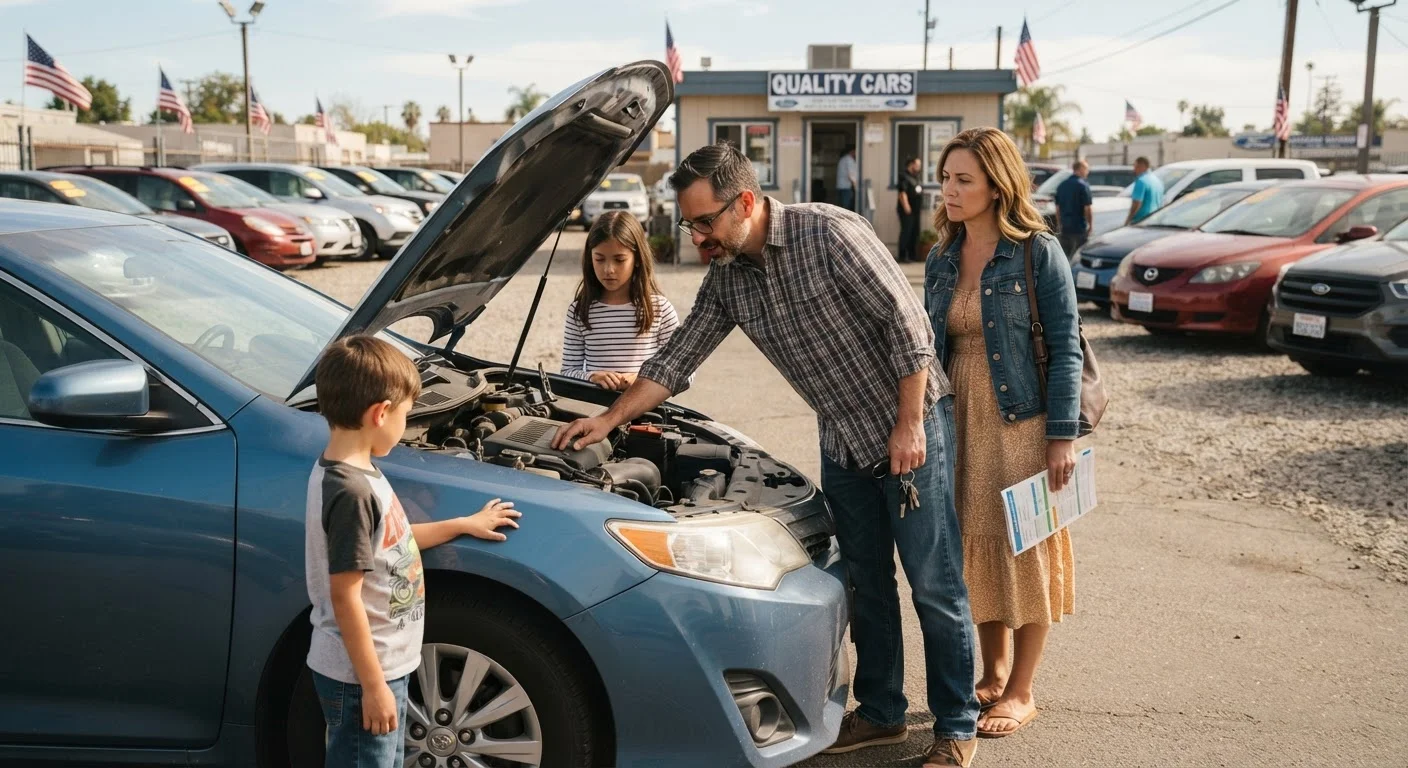
A vehicle history report tells you about the car's past on paper. An independent mechanic tells you what it looks like today. Pay a shop you choose (not one recommended by the seller) to put the car on a lift and inspect it. A typical pre-purchase inspection costs between $100 and $150 and takes about an hour.
The mechanic will check for frame damage, fluid leaks, brake and tire wear, suspension condition, and whether any diagnostic fault codes are stored in the computer. A written report from the inspection gives you negotiating ammunition if problems turn up, and it tells you clearly when a car should be avoided altogether.
For a detailed checklist of what to look for before you commit, see our pre-purchase inspection checklist. Sellers who refuse an independent inspection are a warning sign worth taking seriously.
$100-$150
Typical pre-purchase inspection cost
Independent mechanics generally charge between $100 and $150 for a full used-vehicle inspection, which includes a lift inspection and diagnostic scan.
1 in 5
Used vehicles with a hidden history problem
Carfax has reported that roughly one in five used vehicles it processes shows a previously undisclosed title or accident issue when a history report is run.
Negotiate price using facts, not feelings
Knowing what comparable vehicles have actually sold for in your area is the foundation of any negotiation. Valuation tools from sources such as Kelley Blue Book and the National Automobile Dealers Association (NADA) give you a reference range based on year, make, model, mileage, and condition. Note the distinction between asking price and transaction price: listed prices are often higher than what cars actually sell for.
If the inspection or history report turned up problems, those become direct deductions. A car that needs $600 in tires and $400 in brake work is worth $1,000 less than an equivalent car in clean condition. State that plainly. Sellers generally prefer a lower cash offer to having the car sit unsold. For a broader look at how the new versus used decision plays out financially, our comparison article on new car vs. used car costs covers depreciation and financing differences in detail.
Review the paperwork carefully
The purchase contract is where deals that seemed straightforward can become expensive. Read every line before signing, including the fine print on add-on products such as extended warranties, GAP insurance, paint protection, and service contracts. These are often presented as part of the standard deal, but nearly all of them are optional.
Confirm that the purchase price, trade-in allowance (if applicable), and any fees on the contract match exactly what you agreed to verbally. Dealer documentation fees vary widely by state, and some additional fees listed on the contract have no legal basis. Ask what each fee covers. If a satisfactory explanation is not provided, ask for the fee to be removed.
For a private-party sale, you will need a signed title transfer, a bill of sale, and a receipt. Check your state DMV's requirements before completing the transaction, since rules on odometer disclosure statements and emissions documentation differ by state. Once paperwork is signed and the car is in your name, that vehicle becomes your responsibility, so take your time and get it right.
This article provides general information for educational purposes and does not constitute financial, legal, or mechanical advice. Consult a licensed professional for guidance specific to your situation.

Author
Automotive Editorial Team
Automotive Editorial Team is the collective byline for our editorial team and contributor network. Articles published under this byline or an editorial pen name are researched, written, and reviewed according to our editorial standards for clarity, consistency, and independence before publication.
View all articles