
Container Gardening for Small Yards and Tight Spaces
In this article
Everything a first-time gardener needs to know about growing vegetables, herbs, and flowers in containers on a limited budget.
Key Takeaways
- Container gardening requires no in-ground space, making it workable on balconies, patios, and small yards.
- Repurposed household containers can replace purchased pots and cost nothing.
- Potting mix, not garden soil, prevents drainage problems that kill container plants.
- Herbs and compact vegetable varieties return the most food value per square foot of container space.
- Growing from seed instead of buying transplants can cut startup costs by more than half.
Why container gardening works on a tight budget
Container gardening removes the two biggest barriers to growing food at home: no yard and no large upfront investment. A five-gallon bucket, a bag of potting mix, and a packet of seeds are enough to produce usable quantities of herbs or greens by midsummer.
The financial case is straightforward. A single packet of basil seeds costs around $2 to $3 and can yield dozens of harvests across a season. That same quantity of fresh basil at a grocery store runs $3 to $4 per small bunch. The payback period for most herb containers is measured in weeks, not months.
Container gardens also connect to broader household goals. Homegrown herbs and vegetables reduce grocery spending and support the kind of from-scratch cooking described in our guide to building a budget-friendly pantry. A few pots of flowers or herbs near the front door also contribute to curb appeal without a contractor, which ties into low-cost outdoor upgrades.
The garden scales with your budget. Start with two containers and one variety, then expand only after you have seen what works in your specific conditions.
Choosing and sourcing containers without overspending
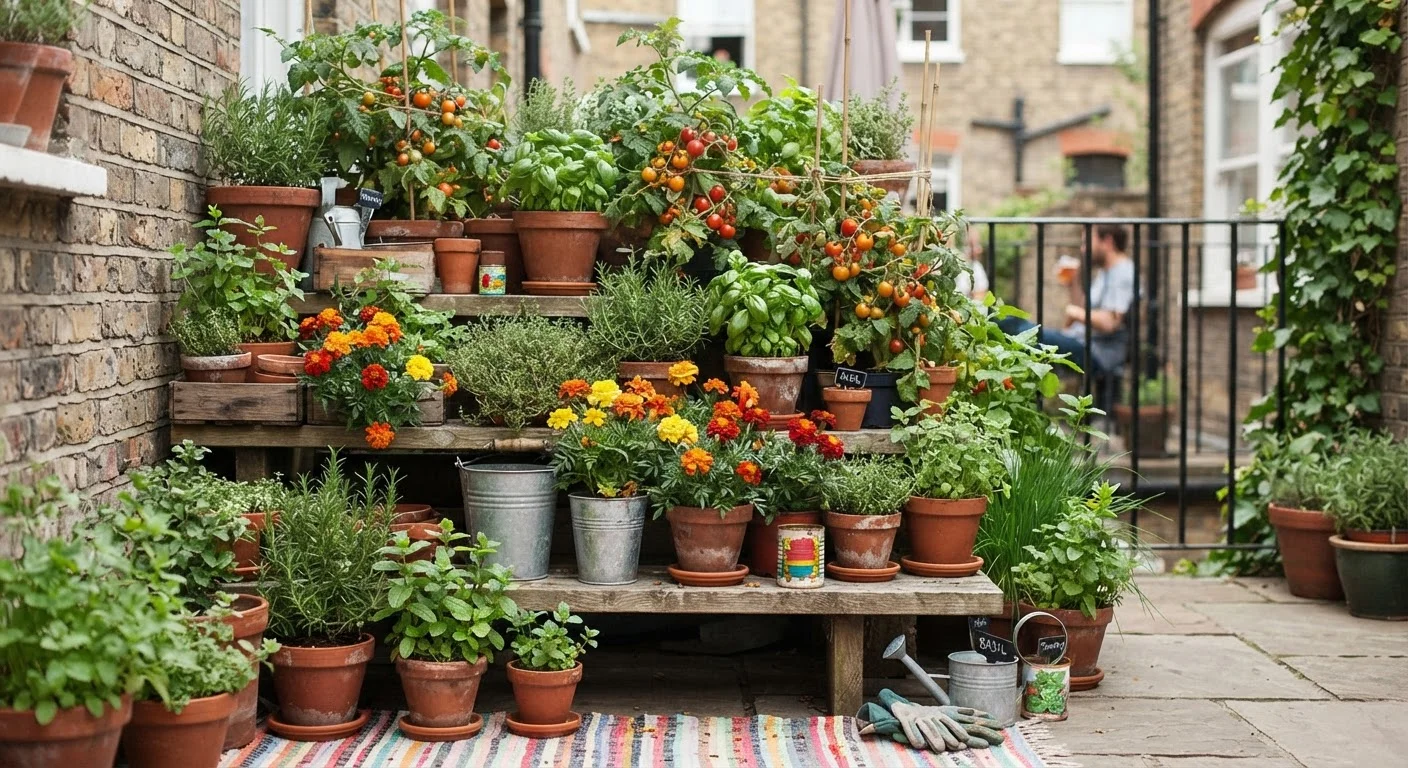
Any watertight vessel with drainage holes drilled in the bottom can function as a planter. Five-gallon food-grade buckets (available free or cheaply from restaurant or bakery operations), wooden crates lined with landscape fabric, old colanders, and cracked stock pots all work. The material matters less than two factors: volume and drainage.
Volume is the main constraint. Most compact tomato varieties need at least five gallons of soil. Lettuce and herbs thrive in two to three gallons. Peppers do well in three to five gallons. Under-sizing a container is the most common beginner mistake, and it consistently produces stunted plants that underperform regardless of watering or fertilizing.
Match container color to your climate
In hot climates, light-colored or white containers keep root zones cooler in direct afternoon sun, which can prevent heat stress in summer. In cooler northern regions, dark containers absorb warmth and can extend the growing season by a few weeks at both ends. Check average summer temperatures for your area before committing to a container color for heat-sensitive crops like lettuce.
If purchasing new containers, unglazed terracotta is inexpensive and breathes well, but it dries out faster than plastic in summer heat. Dark-colored plastic containers absorb heat and can cook roots in direct sun. Light-colored plastic or glazed ceramic holds moisture longer and stays cooler.
Window boxes mounted to railings or fences expand growing space vertically without using floor area, which matters on small balconies. Self-watering containers with built-in reservoirs reduce watering frequency and are worth the modest extra cost if your household tends to forget daily tasks.
Soil, drainage, and watering basics
Potting mix, not garden soil, is the non-negotiable foundation. Garden soil compacts in containers, blocks oxygen from roots, and introduces weed seeds and pathogens. A quality bagged potting mix runs $10 to $15 for a two-cubic-foot bag, which fills roughly three to four five-gallon containers.
Adding perlite (the white volcanic granules sold alongside potting mixes) at roughly 20 percent by volume improves drainage and prevents waterlogging. A small bag costs $5 to $8 and lasts multiple seasons.
Potting mix
A soilless growing medium formulated for containers. It drains well, stays loose, and does not compact the way garden soil does.
Perlite
Lightweight volcanic glass granules mixed into potting soil to improve drainage and prevent roots from sitting in water.
Drainage holes
Openings in the bottom of a container that let excess water escape. Without them, roots suffocate and rot in standing water.
Open-pollinated variety
A plant variety that produces seeds true to the parent, meaning seeds saved from this season's harvest will grow the same plant next year.
Self-watering container
A planter with a built-in water reservoir at the base. The plant draws water upward through the soil as needed, reducing how often you need to water.
Drainage holes are as important as the soil mix. Without them, water pools at the bottom of the container and roots rot within days. Drill at least three holes in any repurposed container before planting.
Watering frequency depends on container size, plant type, and outdoor temperature. The standard test: push a finger an inch into the soil. If it feels dry, water thoroughly until it drains from the bottom. Shallow, frequent watering produces shallow roots and weak plants. Deep, infrequent watering produces stronger root systems. During midsummer heat, small containers may need water daily.
What to grow and where to put it
Sun exposure determines what is possible. Six or more hours of direct sun per day supports tomatoes, peppers, cucumbers, and most herbs. Three to five hours supports lettuce, kale, spinach, parsley, mint, and cilantro. Shade-tolerant plants in partial sun generally still produce; fruiting vegetables in partial shade largely do not.
For a first season on a limited budget, herbs offer the clearest return. Basil, chives, parsley, and mint grow well in smaller containers, need minimal attention, and see regular use in cooking. Cherry tomatoes in a five-gallon or larger container are a reliable step up once you have basic watering habits established.
Deciding between starting from seed and buying nursery transplants affects both cost and timing. Seeds cost a fraction of transplants and offer far more variety. Transplants shorten the time to harvest by several weeks, which matters in short-season climates. Our dedicated piece on seed starting versus buying transplants walks through the tradeoffs in detail.
Grouping containers together slows moisture loss through evaporation and creates a more stable microclimate. Placing heavy containers on wheeled plant caddies lets you move them to follow sun or shelter them from late-season frost.
Keeping costs down over the long haul
The first season is the most expensive because containers and tools are purchased new. By season two, the main recurring costs are potting mix, seeds or transplants, and fertilizer. Refreshing only the top third of potting mix and blending in compost (homemade or bagged) rather than replacing the entire container extends soil life for one to two additional seasons.
Saving seeds from open-pollinated (non-hybrid) varieties eliminates seed costs in subsequent years. Herbs like basil and cilantro self-seed freely if a few plants are allowed to flower and drop seed. This small habit compounds into meaningful savings across a few seasons.
Container garden maintenance fits naturally into a broader home upkeep calendar. If you plan seasonal tasks across the year, the container garden is a low-cost, high-return line item. See how other small maintenance tasks fit into a full-year plan in our guide to stretching a home maintenance budget.
Overwintering perennial herbs (rosemary, thyme, chives) indoors in a sunny window removes the need to repurchase them each spring, cutting annual startup costs by $10 to $20 depending on local plant prices.
Frequently Asked Questions

Author
Home on a Budget Editorial Team
Home on a Budget Editorial Team is the collective byline for our editorial team and contributor network. Articles published under this byline or an editorial pen name are researched, written, and reviewed according to our editorial standards for clarity, consistency, and independence before publication.
View all articles