
Weekend Curb Appeal on a Tight Budget
In this article
Simple, low-cost outdoor upgrades that make a big visual difference without hiring a contractor or spending a lot.
Key Takeaways
- Most curb appeal upgrades cost under $50 and can be completed in a single afternoon.
- Cleaning, painting, and pruning deliver the highest visual return for the least money spent.
- Container plants give renters and owners a flexible, low-commitment way to add color.
- A consistent front-yard maintenance routine prevents small cosmetic issues from becoming costly repairs.
- Lighting, hardware, and house numbers are inexpensive details that change how a home reads from the street.
Why curb appeal matters even when budgets are tight
A home's exterior is what neighbors, guests, and potential buyers see first. For families not planning to sell, a tidy front yard still affects how the home feels to come home to each day. For those who may sell within a few years, the National Association of Realtors has noted that landscaping and exterior improvements consistently rank among the projects with the strongest perceived value return.
None of that requires hiring a landscaper or spending several thousand dollars. The upgrades below are organized around what delivers the most visible improvement for the least money and effort. Most require only basic tools, a free Saturday morning, and materials available at any hardware or garden center.
For context on which home maintenance tasks to prioritize across the full year, see our year-round maintenance planning guide.
Pressure wash or scrub hard surfaces
Dirt, mildew, and algae stains on driveways, walkways, and siding make a home look older and more neglected than it is. A single cleaning session changes that. A gas or electric pressure washer can be rented from most hardware stores for $40 to $75 per day. For smaller areas, a stiff-bristle brush, a bucket of water mixed with diluted oxygen bleach, and some physical effort gets comparable results at almost no cost.
Start with the driveway and front path, then move to any stained siding panels or a dirty porch floor. Allow surfaces to dry fully before painting or sealing anything nearby.
Cleaning alone, before any painting or planting, often produces the biggest single visual change.
Repaint or refresh the front door
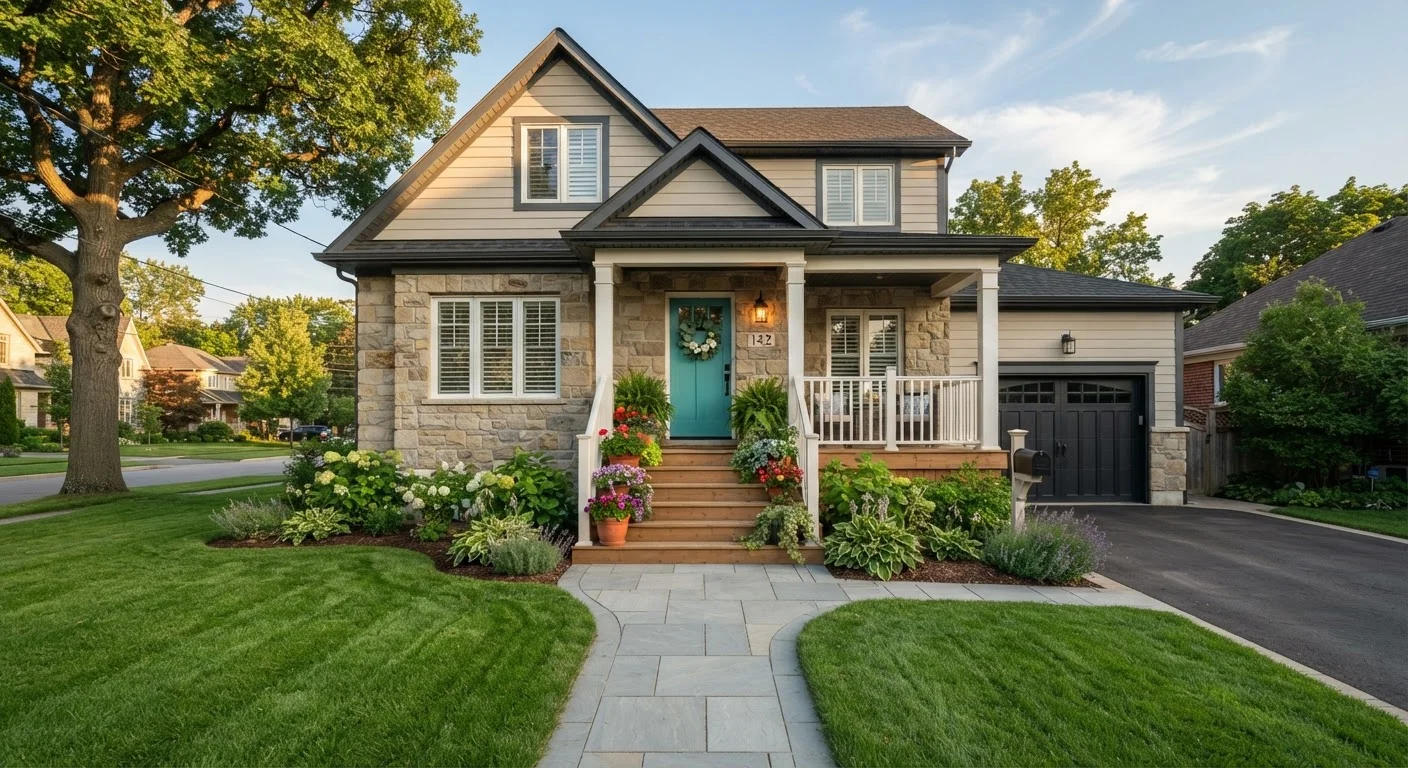
A front door in a faded or peeling finish pulls attention for the wrong reasons. Repainting it is one of the lowest-cost, highest-impact exterior projects available. A quart of exterior paint suitable for doors typically costs $15 to $30, which is enough for two coats on a standard door.
Sand lightly, wipe clean, apply painter's tape around the frame and hardware, and use a small foam roller for the flat panels and a brush for the details. Deep charcoal, navy, and forest green are consistently popular choices that read well against most siding colors, though the right choice depends entirely on the home's existing palette.
A single quart of exterior paint is usually enough to transform a tired front door for under $30.
Edge the lawn and define the beds
A mowed lawn with ragged edges where grass spills onto the walkway or driveway looks unfinished. A manual half-moon edger costs around $20 and creates a clean separation between turf and hardscape. For beds, pulling the edge back a few inches and re-defining the border with a flat spade gives planting areas a structured look without purchasing any edging material.
This step takes about one to two hours for a typical front yard and requires no special skill. The difference when viewed from the street is immediate.
Clean lawn edges signal maintenance and care more clearly than almost any other single detail.
Add container plants at the entry
Two or three containers flanking a front door or placed on porch steps add color and life without any ground preparation. Plastic or resin pots in classic shapes are inexpensive and lighter to move than terra cotta. For warm months, annual flowers such as petunias, marigolds, or calibrachoa fill containers quickly and cost $3 to $6 per six-pack at most garden centers.
Pair a taller thriller plant in the center with a mounding filler and a trailing variety spilling over the edge for a fuller look from a small number of plants. This approach is covered in more depth in our container gardening guide.
A pair of planted containers at the front door costs under $40 and lasts an entire growing season.
Replace or clean exterior hardware and house numbers
Tarnished door handles, rusted house numbers, and a corroded mailbox are small details that compound. Replacing a door handle set runs $20 to $50 at hardware stores. New house numbers in a consistent font and finish cost $2 to $5 per digit. If the existing hardware is in decent shape, a can of spray paint formulated for metal surfaces refreshes it for around $6.
Make sure house numbers are readable from the street, both in daylight and at night. Oversized numbers in a contrasting finish tend to read more clearly than small decorative ones tucked beside the door.
Consistent, readable house numbers and clean hardware make a home look maintained with minimal spend.
Install or upgrade path lighting
Solar path lights along a walkway or driveway cost $15 to $40 for a set of six to eight, require no wiring, and are straightforward to install. They extend the visible improvement from daytime to evening hours, which matters when a home is seen under streetlights or during winter months when it gets dark early.
Stake lights into the ground on alternating sides of the path at even spacing. Choose a fixture style that matches the home's exterior finish (brushed nickel, oil-rubbed bronze, or matte black) rather than mixing metals, which gives the yard a more cohesive look.
Solar path lights require no wiring and add immediate nighttime presence to a front walkway.
Trim overgrown shrubs and low-hanging branches
Shrubs that obscure windows, crowd the front door, or extend over the walkway make a home look closed-in and harder to see from the street. Basic pruning with hand shears or loppers opens up sightlines, lets more light reach the facade, and takes a morning to complete for most front yards.
Remove any dead wood first, then shape the remaining growth. Avoid shearing all shrubs into uniform balls, which looks formal and requires frequent maintenance to maintain. A more open, natural silhouette usually needs attention only once or twice a year.
Pruning back shrubs that crowd the entry costs nothing and immediately opens up the front of the home.
Keeping momentum after the weekend
Curb appeal fades without basic upkeep. A mowed lawn, swept walkway, and watered containers require maybe 30 minutes a week. Blocking out that time prevents the gradual slide back to a neglected exterior.
If you found any of these projects uncovered issues such as soft wood around the door frame, cracked foundation trim, or gaps around windows, address those before they escalate. Our guide to home repair myths covers which fixes genuinely need a professional and which are manageable DIY work.
For families who want to extend the container planting ideas from the list above, our container gardening guide for small spaces covers plant selection, soil mixes, and watering schedules for beginners.
Start with cleaning before buying anything
Before purchasing paint, plants, or hardware, spend two hours cleaning every hard surface at the front of the home. In many cases, cleaning alone closes most of the visual gap. It also helps you see which additional fixes are actually worth the cost and which ones looked necessary only because everything was dirty.

Author
Home on a Budget Editorial Team
Home on a Budget Editorial Team is the collective byline for our editorial team and contributor network. Articles published under this byline or an editorial pen name are researched, written, and reviewed according to our editorial standards for clarity, consistency, and independence before publication.
View all articles