
Beans, Lentils, and the Case for Plant-Based Protein in a Tight-Budget Kitchen
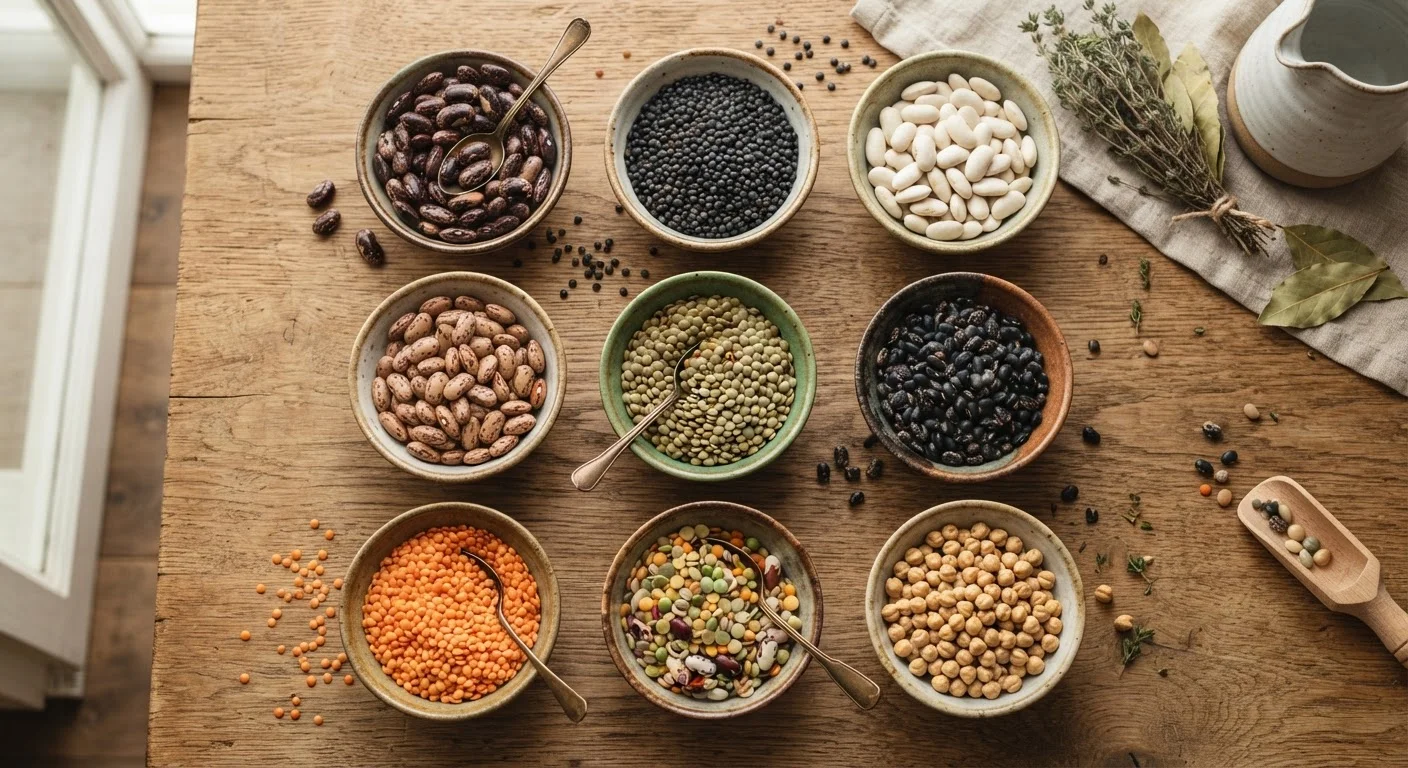
In this article
Explore how legumes deliver protein, fiber, and flavor at a fraction of the cost of meat, with practical tips for cooking them well.
Key Takeaways
- Dried beans and lentils consistently cost less per gram of protein than chicken, beef, or pork.
- Lentils require no soaking and cook in about 20 minutes, making them practical for weeknight meals.
- Canned beans are a convenient alternative that still costs far less per serving than most meat.
- Legumes supply fiber, iron, folate, and potassium alongside their protein content.
- Flavoring legumes well with aromatics and spices removes the blandness problem most families worry about.
What legumes actually cost compared to meat
The price gap between legumes and meat is wide enough to matter on any grocery budget. A pound of dried black beans costs roughly a dollar or less and yields around six cups cooked. A pound of ground beef at $5 or more yields a comparable volume of cooked protein but at three to five times the cost per serving. Dried lentils fall in a similar range to beans and require no advance preparation.
Canned beans cost more than dried but still come in well under most meat options. A standard 15-ounce can of chickpeas typically costs under $1.50 and provides two to three servings of protein. For families planning meals around a weekly budget, swapping even two or three meat-based dinners per week for legume-based ones can reduce the grocery bill noticeably over a month.
$0.15-$0.25
Cost per serving of dried lentils
USDA food cost data consistently places dried legumes among the lowest cost-per-serving protein sources available in American grocery stores.
18g
Protein per cup of cooked lentils
USDA FoodData Central lists approximately 18 grams of protein per cup of cooked lentils, comparable to a 2.5-ounce portion of chicken.
15g
Fiber per cup of cooked lentils
The daily fiber recommendation for most adults is 25 to 38 grams; a single cup of lentils covers roughly 40 to 60 percent of that target.
The nutritional case, plainly stated
Legumes supply protein, but the case for them goes beyond that single number. A cup of cooked lentils provides around 18 grams of protein, roughly 15 grams of fiber, and meaningful amounts of iron, folate, and potassium. Beans vary by type but deliver a similar package. Fiber is the nutrient most American families fall short on, and legumes are one of the cheapest ways to close that gap.
The incomplete protein issue gets more attention than it probably deserves. As long as a family eats a variety of foods throughout the day, including grains, the amino acid shortfall resolves naturally. This is consistent with guidance from the Academy of Nutrition and Dietetics. As the article why eating on a budget does not mean eating badly lays out, cheap food and nutritious food are not in opposition.
Cooking legumes without the hassle
The main friction point with dried beans is time. A standard soak of eight hours followed by an hour of simmering is not compatible with a busy weeknight. There are two practical ways around this.
The first is lentils. Red, green, and brown lentils require no soaking at all and cook in 15 to 25 minutes on the stovetop. Red lentils break down into a thick, almost creamy texture that works in soups and dal. Green and brown lentils hold their shape better and work in salads, grain bowls, and side dishes.
The second is batch cooking. Soaking and cooking a large pot of beans on a Sunday takes about 90 minutes of mostly passive time. Portioning the result into freezer bags means weeknight meals need only a quick thaw. This approach pairs naturally with the principles in cooking once, eating all week. For canned beans, the barrier is even lower: drain, rinse, and use.
Quick-soak method for dried beans
If you did not plan ahead, the quick-soak method cuts the wait significantly. Cover dried beans with water in a large pot, bring to a boil for two minutes, then remove from heat and let sit for one hour. Drain, add fresh water, and cook as normal. This reduces overall cooking time and removes some of the compounds that cause digestive discomfort.
Making legumes taste like dinner, not an afterthought
Plain boiled beans are genuinely bland. The fix is straightforward: cook with aromatics and season well. Start every pot with diced onion and garlic cooked in a small amount of oil until soft. Add a bay leaf and, if budget allows, a smoked ham hock or a strip of kombu (dried seaweed) to deepen the flavor without much cost. Salt the beans after cooking, not before, since early salting can toughen the skin.
Spice blends do a lot of work here. Cumin, smoked paprika, and chili powder turn a pot of pinto beans into the base for tacos, burritos, or rice bowls. A can of diced tomatoes added mid-cook introduces acidity that sharpens the overall flavor. A squeeze of lemon or lime at the end brightens a finished dish quickly.
A well-stocked pantry makes this kind of cooking almost automatic. When dried spices, canned tomatoes, and a few varieties of dried legumes are already on hand, assembling a satisfying meal becomes a matter of 30 minutes rather than a grocery run. For families ready to put legumes into a rotation, twelve filling meals that cost under five dollars offers a concrete starting point.
Frequently Asked Questions

Author
Affordable Eating Editorial Team
Affordable Eating Editorial Team is the collective byline for our editorial team and contributor network. Articles published under this byline or an editorial pen name are researched, written, and reviewed according to our editorial standards for clarity, consistency, and independence before publication.
View all articles