
Fresh vs. Frozen Produce: What Families Should Know Before They Shop
In this article
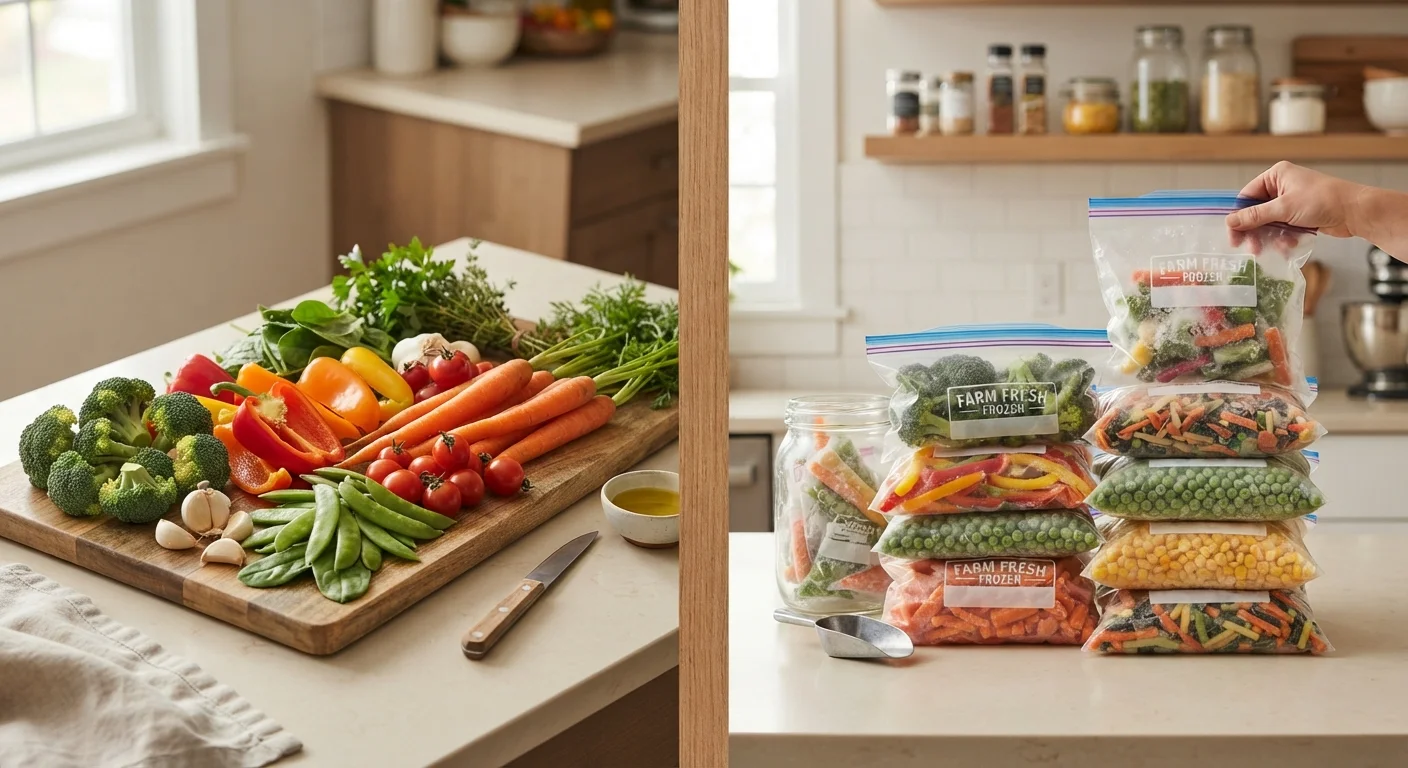
Fresh and frozen vegetables each have real advantages. Here is how to choose between them based on nutrition, cost, and how you actually cook.
Key Takeaways
- Frozen vegetables are harvested and frozen quickly, which preserves most of their nutrients at the time of picking.
- Fresh produce can lose nutrients during shipping and storage before it reaches your kitchen.
- Frozen vegetables typically cost less per serving than their fresh equivalents, especially out of season.
- Fresh produce is better suited to raw preparations, salads, and dishes where texture matters.
- A practical household strategy uses both, depending on the vegetable, the recipe, and the week's budget.
The nutrition question: is frozen actually second-best?
Many families assume fresh vegetables are nutritionally superior. The reality is more complicated. Most commercially frozen vegetables are blanched briefly and then frozen within hours of harvest, which locks in water-soluble vitamins like vitamin C and folate at levels close to peak. Fresh vegetables, by contrast, can travel for days before reaching store shelves, and nutrient loss during that window is well documented in food science literature.
A 2017 study published in the Journal of Food Composition and Analysis by researchers at the University of California, Davis found that frozen vegetables were nutritionally comparable to, and in some cases superior to, fresh vegetables that had been stored for several days. Broccoli, peas, and green beans showed particularly strong nutrient retention in frozen form.
That does not mean fresh produce is nutritionally poor. Vegetables purchased locally and eaten within a day or two of harvest can be nutritionally excellent. The gap narrows considerably when families buy fresh produce with a clear plan to use it promptly. For households that shop once a week or less, frozen often delivers more consistent nutritional value simply because of how storage time affects fresh vegetables.
For more on how common beliefs about food quality can lead families to spend more than they need to, see nutritional myths that affect grocery spending.
A note on added ingredients in frozen vegetables
Plain frozen vegetables, with no sauces or seasoning, are nutritionally straightforward. Some frozen products include added salt, butter sauces, or cheese blends, which changes their sodium and calorie profile. Reading the ingredient list before buying helps families choose the most versatile and nutritious option. For most cooking purposes, plain frozen vegetables give households the most control over flavor and nutrition.
Cost and waste: where frozen has a clear edge
Price varies by season, region, and store, but frozen vegetables are generally less expensive per serving than fresh equivalents, particularly for items like peas, corn, spinach, and mixed stir-fry blends. The USDA Economic Research Service has noted that frozen and canned forms of vegetables often provide lower cost-per-nutrient-serving compared to fresh forms, especially for families in areas with limited access to affordable produce year-round.
Food waste is a second cost factor families often underestimate. Fresh vegetables that go unused before they spoil represent money directly lost. A bag of frozen broccoli, used in portions across several meals, produces almost no waste. For households managing tight weekly budgets, that reliability has real value.
| Criterion | Fresh produce | Frozen produce |
|---|---|---|
| Cost per serving | Higher, especially off-season | Generally lower year-round |
| Nutrient retention | High if eaten within 1-2 days | High, locked in at harvest |
| Shelf life | Days to 1-2 weeks | 8-12 months in freezer |
| Food waste risk | Higher | Low |
| Best for raw dishes | Yes | No |
| Best for cooked dishes | Yes | Yes |
| Seasonal availability | Varies by crop and region | Available year-round |
| Prep time required | Washing, trimming, chopping | Minimal, often pre-cut |
Integrating frozen staples into a weekly meal plan can meaningfully cut grocery costs without reducing vegetable intake. See how a structured weekly meal plan can help families reduce waste and stretch their grocery dollars further.
When fresh produce is the better choice
Texture and specific preparation styles are where fresh produce holds a genuine advantage. Salads, crudites, fresh salsas, and dishes that depend on crunch or a particular bite are difficult to replicate with frozen vegetables. Thawed produce releases water and softens, which makes it unsuitable for many raw applications.
Seasonality also matters. In-season produce, especially when sourced from local growers or farmers markets, delivers flavor and freshness that frozen options cannot match. A tomato picked in late summer and eaten the same week is a different product from a frozen tomato used in January. For families who build meals around what is in season, the cost difference often narrows because seasonal fresh produce tends to be priced lower than out-of-season imports.
Certain vegetables also process poorly after freezing. Cucumbers, lettuce, radishes, and celery lose their defining texture and are not sold frozen for good reason. For those, fresh is the only practical option.
~$0.50
Average cost per serving of frozen vegetables
USDA Economic Research Service data indicates frozen vegetables frequently deliver lower cost per serving than fresh equivalents, particularly out of season.
30-50%
Vitamin C loss in some fresh vegetables after 3 days of storage
Research published in the Journal of Food Composition and Analysis found measurable nutrient decline in fresh vegetables stored at refrigerator temperatures over several days.
80%
Nutrient retention in quickly frozen vegetables
Food science studies indicate that blanching and rapid freezing preserves the majority of heat-stable and water-soluble vitamins in most commercial frozen vegetables.
A practical approach for family shopping
The most cost-efficient household strategy treats fresh and frozen as complementary rather than competing. Buying fresh for vegetables that will be eaten raw or within two days, and reaching for frozen for cooked dishes and longer planning horizons, reduces both spending and waste.
A few guidelines that work for most households: keep a core set of frozen vegetables on hand for soups, stir-fries, and quick weeknight sides. Buy fresh vegetables that are currently in season, because those will be the least expensive and most flavorful. When a fresh vegetable is on sale in large quantities, consider freezing a portion at home before it spoils.
Families growing their own vegetables face a similar decision at the planning stage. The same logic about cost, time, and intended use applies when deciding how much to grow versus buy. Starting from seed versus buying transplants involves comparable trade-offs between upfront investment and long-term savings.

Author
Affordable Eating Editorial Team
Affordable Eating Editorial Team is the collective byline for our editorial team and contributor network. Articles published under this byline or an editorial pen name are researched, written, and reviewed according to our editorial standards for clarity, consistency, and independence before publication.
View all articles