
Stocking a Pantry That Makes Cheap Cooking Actually Possible
In this article
A well-stocked pantry is the foundation of affordable home cooking. Discover which staples earn their shelf space and why.
Why pantry staples change the math on home cooking
Most expensive weeknight meals are expensive because of a missing ingredient. Without olive oil, you buy a jar. Without canned tomatoes, you grab a jarred sauce. Each small substitution adds a dollar here, three dollars there, until the cost-per-meal climbs well past what it needed to be.
A pantry stocked with the right staples breaks that cycle. When your shelves already hold the building blocks, dinner becomes a matter of combining what you have rather than shopping for what you lack. That shift alone is one of the most practical things a family can do to cut grocery spending without eating worse. See how meal planning reinforces this habit in our weekly meal planning guide.
The staples listed below earn shelf space because they appear across many recipes, store for months without spoiling, and cost little per serving. None of them require a large upfront investment if you build the collection gradually.
| Average cost per serving: dried lentils | Under $0.25 (USDA Economic Research Service food cost data) |
| Shelf life: white rice in airtight storage | Up to 2 years (USDA Food Safety and Inspection Service) |
| Shelf life: dried beans | 2 to 5 years (quality), indefinitely safe (USDA Food Safety and Inspection Service) |
| Shelf life: ground spices | 1 to 3 years (potency) (FDA food storage guidelines) |
| Pantry staples as share of total recipe cost | Often 20 to 40% (General culinary cost analysis; varies by recipe) |
| Cost advantage: dried vs. canned beans | Dried typically 50 to 70% less per serving (Retail pricing comparisons; varies by region and brand) |
The core categories every budget pantry needs
Grains and dried pasta
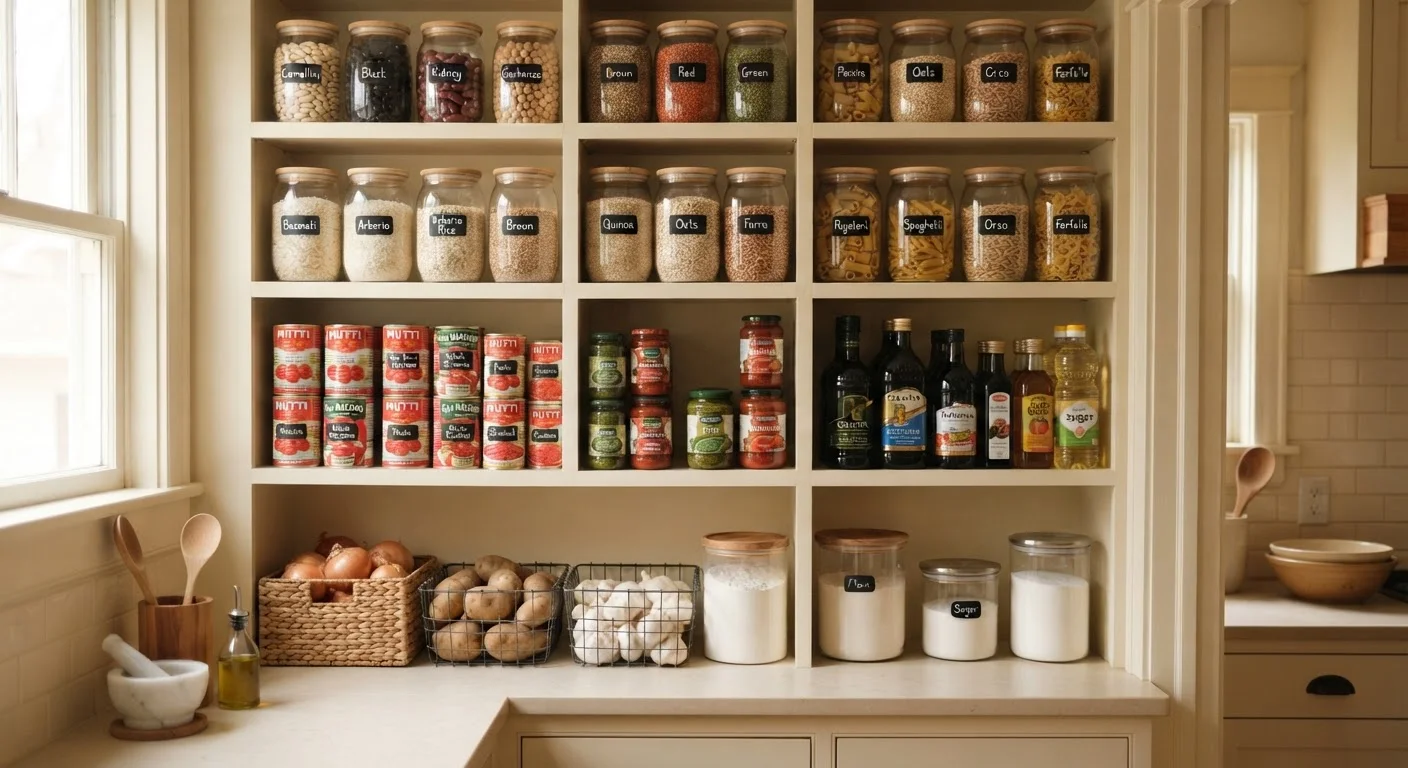
Rice, rolled oats, dried pasta, and cornmeal each cost pennies per serving and anchor hundreds of family meals. Long-grain white rice and brown rice serve different purposes: white rice cooks faster and stretches soups; brown rice adds fiber and holds up well in grain bowls. Dried pasta in two or three shapes covers most sauce styles. Rolled oats handle breakfast and can replace breadcrumbs in meatballs or meatloaf.
Legumes
Dried beans and lentils deliver protein and fiber at a fraction of meat prices. Lentils require no soaking and cook in under 30 minutes, making them practical on busy weeknights. Canned beans cost more than dried but are still inexpensive and ready immediately. Keeping both formats on hand gives you flexibility. For a deeper look, our guide on legumes covers cooking technique and flavor-building in detail.
Canned and jarred goods
Canned whole tomatoes, diced tomatoes, and tomato paste form the base of pasta sauces, chilis, soups, and braises. Canned coconut milk opens up curry and rice dishes. Low-sodium chicken or vegetable broth, whether canned or in cartons, replaces water in grains and soups and adds flavor at minimal cost.
Fats and acids
A neutral oil (such as canola or vegetable oil) handles high-heat cooking. Olive oil works for lower-heat applications and salad dressings. White and apple cider vinegars act as acid balancers that sharpen the flavor of nearly any savory dish. These two categories appear in almost every recipe and have long shelf lives.
Spices and aromatics
Garlic powder, onion powder, cumin, smoked paprika, chili powder, dried oregano, and black pepper collectively cover most flavor profiles. Fresh garlic and onions store well at room temperature for weeks and appear in virtually every cuisine. A modest spice collection, built over time, costs far less than buying pre-seasoned or convenience foods.
Pantry staple
A shelf-stable ingredient that appears frequently across many recipes and can be stored for weeks or months without refrigeration. Staples form the foundation of low-cost cooking because they reduce the need for last-minute purchases.
Shelf-stable
A food product that can be stored safely at room temperature without refrigeration for an extended period. Examples include dried grains, canned goods, and dried legumes.
Legume
A plant family that includes beans, lentils, and peas. Legumes are high in protein and fiber and are among the least expensive protein sources available at most grocery stores.
Acid balance
The use of an acidic ingredient such as vinegar or citrus juice to sharpen or lift the overall flavor of a dish. A small amount of acid added near the end of cooking can make inexpensive ingredients taste brighter and more complete.
Cost per serving
The total ingredient cost of a recipe divided by the number of portions it produces. This figure is more useful than total recipe cost for comparing how affordable different meals actually are.
Putting it together without spending a lot upfront
Building a complete pantry all at once can feel expensive. A more practical approach is to add two or three items per grocery trip, prioritizing whatever your most common recipes already call for. Within a month or two, the gaps fill in.
Buying shelf-stable staples in larger quantities generally lowers the per-unit cost, but only if your household will use them before they degrade. Rice stored in an airtight container stays good for up to two years. Dried beans remain edible even longer, though older beans take more time to soften when cooked. Spices lose potency after about one year, so smaller quantities make more sense there.
A stocked pantry also makes the cooking methods described in sheet pan and big-pot cooking far more practical, because you rarely need a special shopping trip before starting. And once your pantry is in place, batch cooking becomes straightforward: most batch recipes rely entirely on pantry staples plus one or two fresh proteins or vegetables.
For families skeptical that budget ingredients can produce satisfying food, the evidence on budget eating is worth reviewing. And once your pantry is stocked, twelve meals under five dollars gives you immediate recipes to pull from it.

Author
Affordable Eating Editorial Team
Affordable Eating Editorial Team is the collective byline for our editorial team and contributor network. Articles published under this byline or an editorial pen name are researched, written, and reviewed according to our editorial standards for clarity, consistency, and independence before publication.
View all articles