
The Weekly Meal Plan: A Family's Roadmap to Spending Less at the Grocery Store
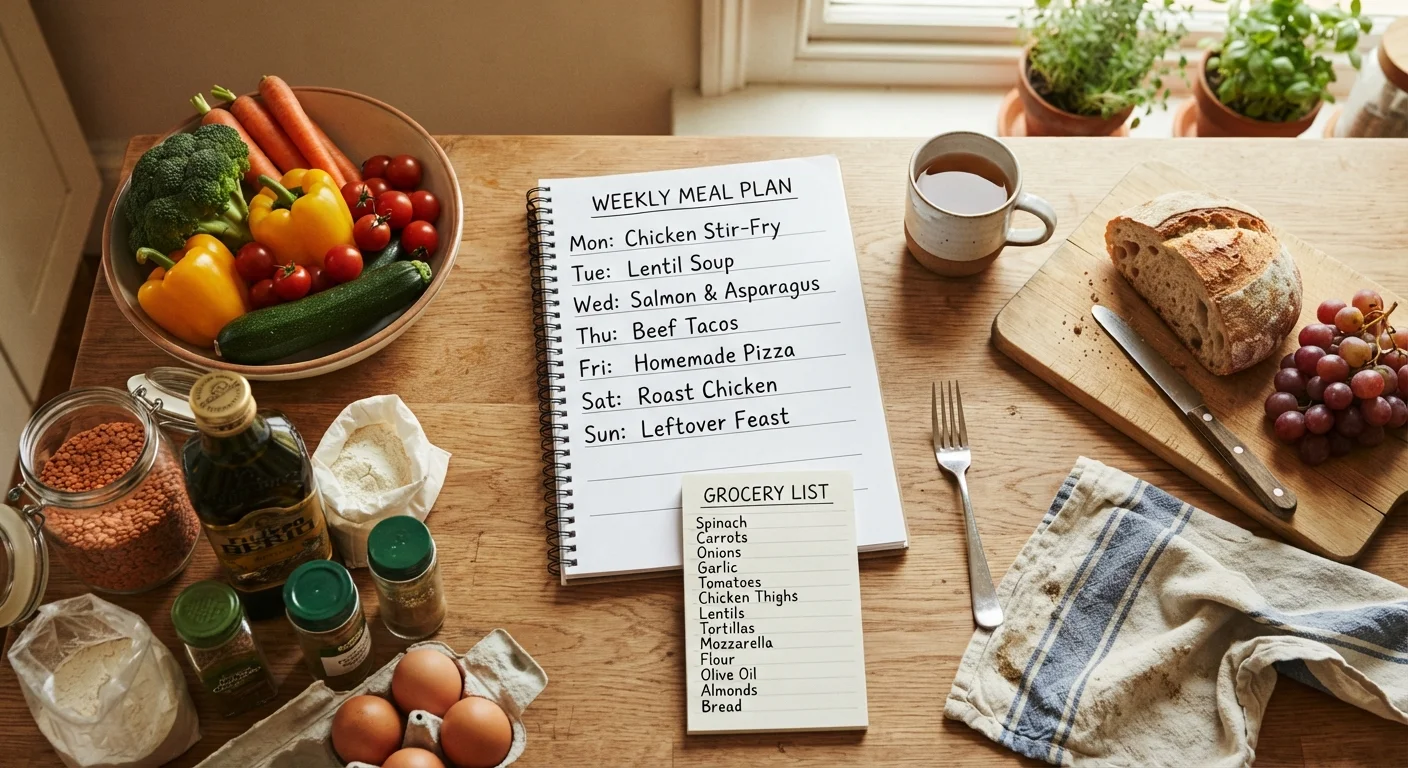
In this article
Learn how weekly meal planning helps families reduce food waste, avoid impulse buys, and stretch a grocery budget without sacrificing variety.
Key Takeaways
- Planning meals before you shop consistently reduces impulse purchases and food waste.
- Building a plan around what is already in your pantry lowers the weekly grocery spend.
- A repeatable planning routine takes less time each week once the habit is established.
- Choosing flexible ingredient overlaps across meals stretches every dollar further.
- Batch-friendly meals reduce both cooking time and cost-per-serving across the week.
Why a weekly plan changes what you spend
Grocery overspending rarely comes from a single bad decision. It comes from shopping without a plan, buying ingredients that never become meals, and filling in gaps with takeout. The USDA's food cost data consistently shows that households without a structured shopping list spend more per week than those who plan ahead, and the difference compounds across months.
A weekly meal plan does two things at once: it tells you exactly what to buy, and it tells you what not to buy. That second part is where families usually save the most money. If you want a fuller picture of how food spending fits into your household finances, see how household budgets work for context on where grocery dollars often drift.
The steps below walk through a practical planning process any family can complete in under an hour on the weekend.
What you will need
Step-by-step: building your weekly meal plan
Follow these steps in order. Each one builds on the last, and skipping ahead tends to produce a list that looks complete but still generates food waste.
Take a pantry and freezer inventory
Before writing a single meal idea, open your pantry, fridge, and freezer and note what is already there. Canned beans, pasta, rice, frozen proteins, and partial bags of grains are all usable. Meals built around existing stock cost less because you are buying fewer items.
A well-stocked pantry makes this step faster over time. Building a pantry baseline explains which staples earn their shelf space week after week.
Decide how many meals you actually need
Count how many breakfasts, lunches, and dinners the family will eat at home this week. Be honest: account for work lunches, school days, and any nights with outside commitments. Planning five dinners when the family is home for only four means one meal's worth of ingredients goes unused.
Choose meals that share ingredients
Pick dinners that use overlapping ingredients. If one meal calls for a bunch of cilantro, plan a second meal that also uses cilantro. If you are buying a large can of diced tomatoes, plan two dishes that need it. This approach reduces the chance that specialty items go to waste after a single use.
For protein, consider planning at least one or two meals around legumes like beans or lentils. They cost significantly less per serving than meat and work in soups, tacos, grain bowls, and stews.
Write a precise shopping list organized by store section
Once your meals are chosen, write out every ingredient you need and subtract what you already have. Group the list by store section: produce, dairy, proteins, dry goods, frozen. This structure reduces backtracking in the store and makes it harder to add unplanned items to the cart.
Check quantities carefully. Buying a 28-ounce can when a recipe needs 14 ounces is fine if you will use the rest; it is waste if you will not.
Review the plan for cooking-method efficiency
Before finalizing, look at the week's meals and ask which ones can be cooked together. A sheet pan dinner and a pot of soup can often share oven time or stovetop time on the same evening. Cooking method strategies can lower your cost-per-serving while also cutting weeknight effort.
If two meals call for similar prep (chopping onions, cooking grains), do both at once and refrigerate what you will need later in the week.
Once your plan is running for a few weeks, consider pairing it with batch cooking basics to cut weeknight cooking time alongside grocery costs.
Common problems and how to fix them
Even a well-made plan runs into friction. The most common issue is over-planning: scheduling seven dinners when the family realistically eats at home five nights. Build two flex nights into every week so the plan does not collapse when something unexpected comes up.
Produce waste is another frequent problem. Buying more fresh vegetables than a family can use in four or five days inflates costs without adding nutrition. Frozen vegetables are nutritionally comparable to fresh and have no spoilage risk, making them a practical backup for later in the week.
If your plan keeps drifting over budget, the issue is often what goes into the cart beyond the list. Common grocery budget leaks covers the specific habits that quietly add to your bill week after week.
Rotate a few reliable meal templates
Families who plan consistently often use a loose template: one soup or stew night, one grain bowl night, one egg-based meal, and so on. Templates reduce decision fatigue and make planning faster each week. You do not need a different meal every night to eat well on a budget.

Author
Affordable Eating Editorial Team
Affordable Eating Editorial Team is the collective byline for our editorial team and contributor network. Articles published under this byline or an editorial pen name are researched, written, and reviewed according to our editorial standards for clarity, consistency, and independence before publication.
View all articles