
Sheet Pan Dinners, Big Pots, and Other Strategies That Make Cheap Cooking Easier
In this article
Certain cooking methods consistently produce lower cost-per-serving meals. This guide covers the techniques that deliver the most value for families.
Key Takeaways
- Sheet pan cooking and large-pot methods lower cost-per-serving by using cheap, high-yield ingredients efficiently.
- Cooking larger quantities at once reduces energy costs and cuts the number of trips to the store.
- Stretching proteins with grains, legumes, and vegetables is one of the most reliable ways to lower a meal's price.
- A well-stocked pantry makes all of these methods faster and less dependent on expensive last-minute purchases.
- Batch cooking compatible methods like braising and soup-making compound savings across the entire week.
Why cooking method changes the math
Most budget cooking advice focuses on what to buy. The method you use to cook those ingredients matters almost as much. Certain techniques naturally favor cheap, filling components: root vegetables, dried legumes, whole grains, bone-in cuts. Others require expensive ingredients to work. Choosing the right method first shapes what ends up in the cart.
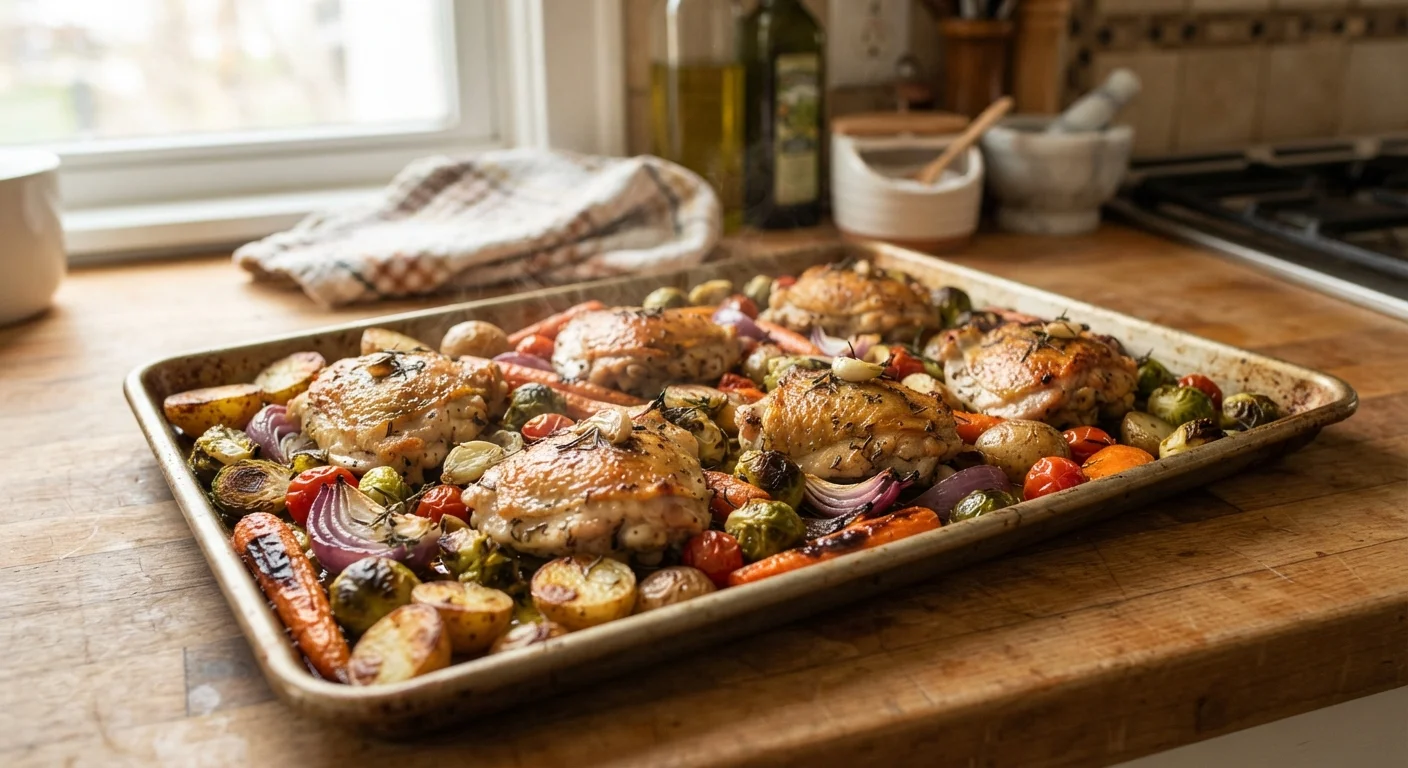
Sheet pan cooking, large-pot braising, and stovetop simmering share one useful trait: they tolerate cheaper raw materials without punishing the outcome. A bone-in chicken thigh roasted on a sheet pan with carrots and potatoes produces a better result than a boneless breast prepared the same way, and it costs less. The method rewards the budget choice rather than fighting it.
Pairing your cooking approach with a weekly meal plan locks in those savings across multiple dinners rather than a single night.
Sheet pan dinners: the case for high heat and one pan
A sheet pan dinner works by concentrating oven heat around ingredients spread in a single layer, which produces browning and flavor without added fat or fuss. The practical advantage for budget cooking is that it handles almost any combination of protein and vegetable you already have on hand.
Choose bone-in, skin-on cuts for sheet pan roasting
Bone-in cuts cost less per pound and stay moist under high heat better than lean boneless options. The skin crisps and bastes the meat as it renders, which removes the need for marinades or added fats.
Fill at least half the pan with vegetables before adding protein
Vegetables cost less than protein per pound in almost every category. Filling the pan with them first keeps the cost per serving low while still producing a complete, satisfying meal.
Use long braises to turn tough cuts into multiple meals
Cheap cuts require time, not technique. Braising breaks down collagen into gelatin, which produces tender meat and a rich cooking liquid that can be used as a sauce or soup base.
Cook grains and legumes in large batches and refrigerate for the week
Grains and legumes are cheapest bought dry and in bulk, but they require time to prepare. Cooking a large pot once and portioning it throughout the week eliminates the temptation to reach for more expensive convenience options.
Build flavor with aromatics rather than expensive sauces
Garlic, onion, dried chiles, and whole spices cost very little and generate significant depth of flavor. Relying on them rather than bottled specialty sauces keeps recurring grocery costs low.
Cheaper cuts like chicken drumsticks, bone-in thighs, and skin-on pieces perform better with high-dry heat than they do with quick sauteing. Root vegetables including parsnips, sweet potatoes, and beets become naturally sweet when roasted, reducing the need for sauces or extras. A single 18-by-26-inch sheet pan can feed a family of four from one oven cycle, which cuts energy use compared to running multiple burners.
For recipe ideas that work with these ingredients, see filling meals that cost under five dollars.
Big pots: soups, stews, and braises
A large pot multiplies value in two ways. First, it allows you to cook large quantities in one session, spreading the labor and energy cost across several meals. Second, long cooking transforms tough, inexpensive cuts and whole dried legumes into tender, flavorful food that competes with far more expensive preparations.
Braising is the clearest example. Chuck roast, pork shoulder, and chicken thighs all cost less per pound than quick-cooking cuts, and they improve with the low, slow heat a covered pot provides. A single three-pound chuck roast braised with onions, canned tomatoes, and stock produces enough meat for tacos, grain bowls, and sandwiches over several days.
Soup is the easiest entry point. A pot of lentil or bean soup built on aromatics, canned tomatoes, and broth costs a fraction of most dinners per serving. Legumes are particularly effective here because they add protein and fiber without raising the ingredient cost. The batch cooking approach pairs directly with big-pot methods: cook once on Sunday and refrigerate or freeze individual portions for the week.
Stovetop strategies that stretch ingredients
Not every affordable meal requires an oven or a long simmer. Several stovetop approaches reliably lower cost-per-serving by stretching proteins and making vegetables the center of the plate.
Fried rice and grain bowls are two examples. Both start with cooked grains (rice, farro, barley) and use small amounts of protein alongside large quantities of vegetables and aromatics. One egg per person, a handful of frozen peas, and a cup of leftover rice produces a complete dinner for less than a dollar a serving when built on a well-stocked pantry. The pantry staples that make this possible include oils, soy sauce or vinegar, dried spices, and grains in bulk.
Stir-frying and hash-style cooking follow the same logic: use aromatics aggressively to build flavor, keep the protein portion moderate, and fill the rest of the pan with whatever vegetable is cheapest that week. This approach works across cuisines and does not require any specialized equipment beyond a wide, heavy pan.

Author
Affordable Eating Editorial Team
Affordable Eating Editorial Team is the collective byline for our editorial team and contributor network. Articles published under this byline or an editorial pen name are researched, written, and reviewed according to our editorial standards for clarity, consistency, and independence before publication.
View all articles