
What Your Car's Warning Lights Are Actually Telling You
In this article
Decode the most common dashboard warning lights, what triggers them, and when to act before a small issue becomes a costly repair.
Why warning lights exist and what they cost you to ignore
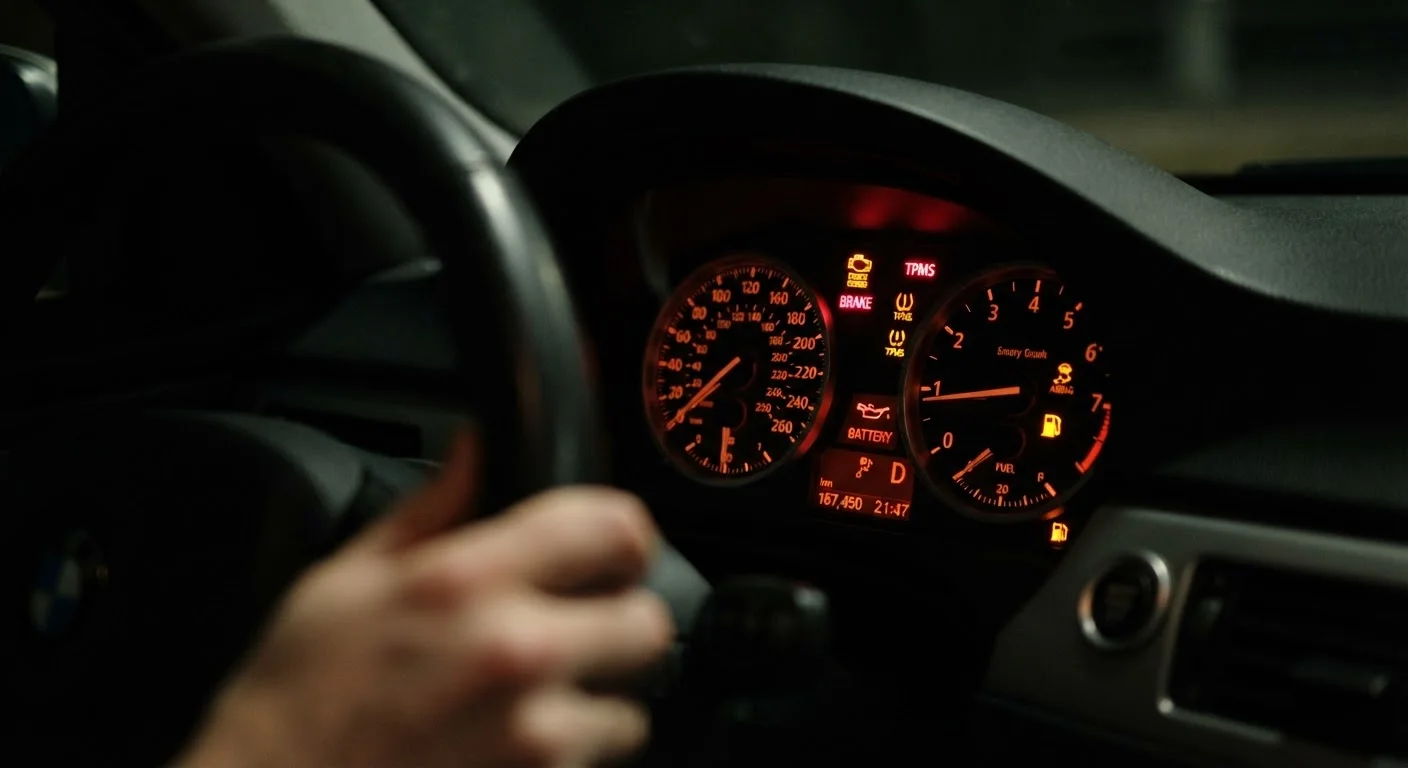
Your car's dashboard warning lights are outputs from the onboard diagnostic system, a network of sensors that monitors engine performance, fluid levels, emissions, safety systems, and more. When a sensor detects a reading outside the expected range, it sends a signal to the vehicle's control module, which turns on the corresponding light.
The financial stakes matter here. A check engine light triggered by a loose gas cap costs nothing to fix. The same light ignored for months while a misfiring cylinder damages the catalytic converter can result in a repair bill that commonly runs $1,000 to $2,500. Acting early is almost always cheaper than acting late.
If you are evaluating a used car and notice any warning lights on the dash, treat them as a serious flag. See the pre-purchase inspection checklist for a structured way to evaluate those signals before you commit.
| Colors and urgency | Red: act now. Amber/yellow: investigate soon. Green/blue: informational. |
| OBD-II code reader cost | Basic scanners typically run $25 to $100; many auto parts stores read codes for free |
| Vehicles required to have OBD-II | All gasoline passenger cars and light trucks sold in the US from 1996 onward (US EPA OBD-II mandate) |
| TPMS requirement | Mandatory on all new US passenger vehicles sold from September 2007 onward (NHTSA FMVSS 138) |
| Flashing check engine light | Indicates an active misfire; reduce speed and seek service promptly |
| Overheating repair cost range | Cylinder head repair commonly $1,500 to $3,000 or more depending on engine type |
The lights you will see most often
Dashboard symbols use color to signal urgency. Red means stop or act immediately. Yellow or amber means investigate soon. Green and blue are informational, usually confirming that a system is active.
OBD-II
On-board diagnostics, second generation. A standardized system built into vehicles sold in the US after 1996 that monitors engine and emissions performance and stores fault codes readable by a scan tool.
Fault code (DTC)
A diagnostic trouble code stored by the vehicle's computer when a sensor reading falls outside acceptable parameters. Each code corresponds to a specific system or circuit, which helps narrow down the problem.
Malfunction indicator lamp (MIL)
The formal name for the check engine light. It illuminates when the OBD-II system detects a fault that affects emissions or engine performance.
TPMS
Tire pressure monitoring system. Required on all new US passenger vehicles since 2008, it uses sensors at each wheel to alert the driver when tire pressure drops below a threshold set by the manufacturer.
Catalytic converter
An exhaust system component that converts harmful combustion byproducts into less harmful gases. Prolonged engine misfires can overheat and destroy it, making it one of the more expensive consequences of ignoring a check engine light.
Check engine (malfunction indicator lamp)
This is the most misunderstood light on any dashboard. It covers hundreds of possible fault codes, from a loose gas cap to a failing oxygen sensor to a serious internal engine fault. A steady light means pull over when safe and investigate. A flashing check engine light means a misfire is actively occurring and you should reduce speed and get the car to a mechanic promptly, because continued driving can destroy the catalytic converter.
A code reader (OBD-II scanner) plugged into the port under the dashboard reads the stored fault code. Many auto parts stores will read this code for free. That code narrows the problem significantly before you speak with a mechanic.
Oil pressure warning
A red oil can symbol means oil pressure has dropped to a dangerous level. This is a stop-immediately situation. Driving with low oil pressure can seize the engine within minutes, turning a $50 oil top-off into a $4,000 engine replacement. Pull over safely, turn off the engine, and check the oil level. If the level is normal and the light stays on after restarting, the pressure sensor or oil pump may be failing. Do not drive the vehicle until a mechanic has inspected it.
Temperature warning
A red thermometer symbol means the engine is overheating. Turn off the air conditioning, turn on the heater (it draws heat away from the engine), and pull over as soon as safely possible. Continuing to drive an overheating engine can warp the cylinder head, a repair that commonly costs $1,500 to $3,000 or more. Never open the radiator cap on a hot engine.
Battery warning
A red battery symbol usually means the charging system is not keeping the battery topped up. The alternator is the most common cause. Once this light appears, the vehicle may continue running on battery power for a short time, but it will eventually stall. Get to a mechanic the same day if possible.
Tire pressure (TPMS)
This amber light looks like a cross-section of a tire with an exclamation point. It triggers when one or more tires drop significantly below the recommended pressure, which affects handling, fuel economy, and tire wear. Check all four tires with a gauge and inflate to the pressure listed on the sticker inside the driver's door jamb, not the number printed on the tire sidewall. If the light stays on after inflating, a sensor or slow leak may need professional attention. For a broader look at what maintenance you can handle yourself, see DIY maintenance tasks safe to do yourself.
Brake warning
A red circle with an exclamation point (or the letter P inside a circle) has two possible meanings. If the parking brake is engaged, releasing it clears the light. If the parking brake is off and the light stays on, it may indicate low brake fluid or a fault in the brake system. Do not ignore this. Have it inspected before your next drive.

Author
Automotive Editorial Team
Automotive Editorial Team is the collective byline for our editorial team and contributor network. Articles published under this byline or an editorial pen name are researched, written, and reviewed according to our editorial standards for clarity, consistency, and independence before publication.
View all articles