
Free and Low-Cost Activities Worth Building a Family Trip Around
In this article
From national forests to living history museums with free admission days, explore US experiences that deliver real fun without high ticket prices.
Key Takeaways
- National forests, Bureau of Land Management lands, and many state parks charge little or nothing for day use.
- Many US museums offer free admission on set days each month, including some Smithsonian affiliates.
- Living history sites, farmers markets, and public festivals give families real cultural experiences at low cost.
- Structuring a trip around free anchor activities lets you control the budget without cutting the itinerary.
- Public libraries in travel destinations often loan passes to local attractions at no charge.
Why the activity budget is where families gain the most ground
Lodging and gas are largely fixed costs on a family trip. Activities are where spending is most elastic, and where families can make or lose significant ground on the total bill. A theme park can run $120 or more per person before food. Four days of well-chosen free and low-cost alternatives at the same destination can cost a fraction of that while producing memories that hold just as well.
The strategies below are not about doing less. They are about choosing differently. Many of the country's most genuinely engaging experiences, from old-growth forests to hands-on science museums, are either free or priced well within reach of a tight travel budget. See our introduction to budget family travel for the broader planning framework this fits into.
National forests and Bureau of Land Management lands
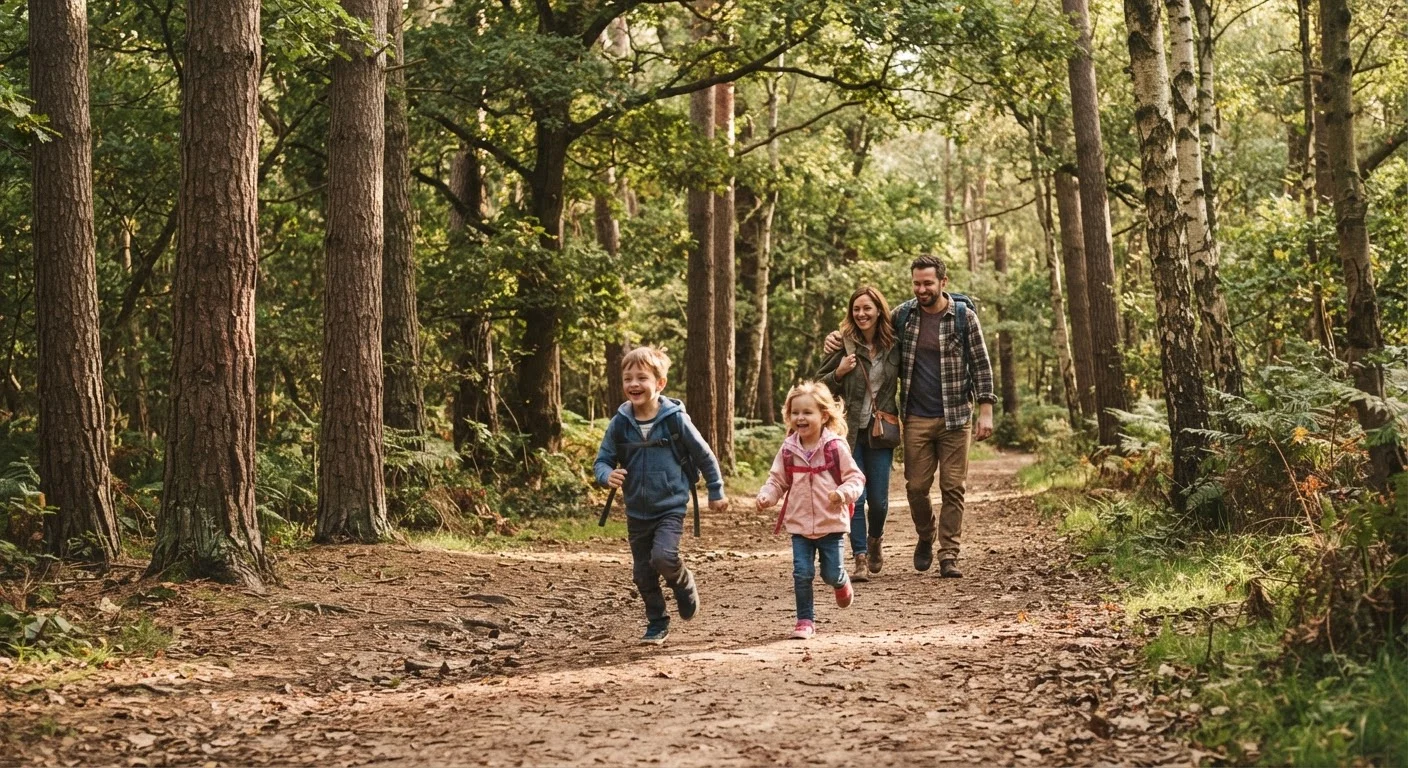
The US Forest Service manages roughly 193 million acres across the country, and the Bureau of Land Management oversees another 245 million. Most of it is open to the public at no charge. Families can hike, swim in natural swimming holes, fish (state fishing license required), and camp at primitive sites for free or a small fee, often $5 to $10 per night.
Unlike national parks, these lands rarely have entrance booths or timed-entry reservations. You show up, you explore. The trade-off is less infrastructure: fewer paved paths, fewer visitor centers, and more self-reliance required. Bring a paper map or download offline maps before you go, because cell coverage is inconsistent on many of these lands.
193 million acres of national forest are open to families with little or no entrance fee.
Museum free admission days
Hundreds of US museums, including science centers, art museums, children's museums, and natural history institutions, designate one or more free days per month. The Smithsonian's Washington, D.C. museums and the National Zoo are free every day. Many Smithsonian affiliate institutions around the country offer reduced or free admission on specific dates.
The Bank of America Museums on Us program, available to cardholders on the first full weekend of each month, covers free admission at participating cultural institutions in cities across the country. Check participation lists before assuming coverage. Public libraries in many cities also loan museum passes that waive or significantly reduce admission for cardholders, and some libraries extend that benefit to visitors who hold cards from any US library system.
Public library museum passes can waive or reduce admission costs at destinations nationwide.
Living history sites and heritage areas
Living history museums, where costumed interpreters demonstrate colonial, frontier, or industrial-era life, tend to be both educational and genuinely engaging for children. Entry fees vary, but National Heritage Areas designated by the National Park Service often include visitor centers, walking trails, and programming at no charge.
Many communities host heritage festivals tied to their local history, and these are almost always free or low-cost. A weekend in a town built around its mill history, mining past, or agricultural roots can deliver a full day of structured activity without a ticket window in sight. Check the National Park Service's National Heritage Areas directory online before your trip.
National Heritage Areas often include free trails, visitor centers, and public programming.
Urban parks, riverfronts, and public beaches
Major US cities have invested heavily in public green space, and families often overlook what is available at no cost. Chicago's Millennium Park, Denver's City Park, San Antonio's River Walk, and Portland's Forest Park are all free to enter and offer hours of activity. Paddleboats, splash pads, outdoor fitness equipment, and free summer concerts are common in city park systems across the country.
Public beaches on the Great Lakes, Gulf Coast, and Atlantic seaboard are generally free, though parking fees vary by location and season. Ocean-side state park beaches typically charge a parking or day-use fee in the $5 to $15 range, which is far below what nearby private beach clubs charge. Arrive early in peak season to secure a spot and avoid the highest parking rates.
City parks and public beaches deliver full days of family activity at little or no cost.
Farmers markets and public festivals
Nearly every US city and many small towns run a weekly farmers market between late spring and early fall. Entry is free, and the combination of food sampling, local crafts, and live music makes for an easy half-day for families. Children who have little patience for indoor sightseeing often respond well to this kind of open, sensory-rich environment.
Public festivals tied to harvests, cultural traditions, or civic events follow the same pattern. Fourth of July celebrations, fall harvest festivals, and ethnic heritage events are free to attend in most communities. Use local event calendars, the destination city's tourism website, or local Facebook community groups to find events that overlap with your travel dates.
Farmers markets and civic festivals are almost always free and take up a genuine half-day.
Junior Ranger programs and ranger-led walks
The National Park Service's Junior Ranger program is available at more than 400 parks and costs nothing beyond any existing park admission. Children complete age-appropriate activity booklets, attend a short ranger presentation, and receive a badge. For kids between roughly 5 and 12, it tends to be the most remembered part of a park visit.
Ranger-led walks and campfire talks are also free with park admission and run regularly in season. These programs turn a passive walk through scenery into something structured and interactive. Check the park's current schedule on the NPS website or at the visitor center upon arrival. Programs fill up, so it is worth confirming times on the first day of your visit.
The Junior Ranger program is free, available at over 400 parks, and genuinely holds kids' attention.
Putting it all together before you leave home
The families who spend the least on activities are almost always the ones who researched before they left. Check the destination city's parks and recreation website, the local library system, and any museum or cultural site websites for free admission calendars. Many institutions publish these schedules months in advance. If your trip overlaps with a free admission weekend, build your hotel checkout around it rather than the other way around.
For outdoor-heavy trips, understanding how national parks, state parks, and free public lands differ will help you match the right land type to your budget. And if you are driving to your destination, road-tripping strategies that actually work can bring the travel cost down before you even arrive.
Check library cards before you travel
Many public library systems issue temporary non-resident cards or honor out-of-state cards for museum pass lending. Before your trip, contact both your home library and the destination city's main library branch to ask about reciprocal borrowing and attraction pass programs. Some systems let you reserve passes online weeks in advance, which is worth doing for high-demand institutions.

Author
Budget Travel Editorial Team
Budget Travel Editorial Team is the collective byline for our editorial team and contributor network. Articles published under this byline or an editorial pen name are researched, written, and reviewed according to our editorial standards for clarity, consistency, and independence before publication.
View all articles